Introduction
Some romance anime take themselves very seriously. Then there’s Tomodachi no Imouto ga Ore ni Dake Uzai — a series that opens with a girl who relentlessly pesters only one person in the world, and somehow turns that single absurd premise into one of the most charming romantic comedies of Fall 2025.
Whether you’ve already watched the anime and want to dig deeper, you’re curious about the light novel source material, or you’re simply trying to figure out if this is worth your time, this guide covers everything you need to know about ImoUza from start to finish.
What Does “Tomodachi no Imouto ga Ore ni Dake Uzai” Mean?
Let’s start with the title, because it tells you everything you need to know about what to expect.
In Japanese, 友達の妹が俺にだけウザい translates literally to “My Friend’s Little Sister is Only Annoying Toward Me.” The official English title, as licensed by J-Novel Club, is My Friend’s Little Sister Has It In for Me! — and the shorthand abbreviation used by the community is simply ImoUza.
The title captures the central hook perfectly. Iroha Kohinata is, by all accounts, a model student — kind, diligent, and well-liked at school. But around one specific person, Akiteru Ooboshi, she becomes a relentless, mischievous pest. Only him. Always him. And nobody can figure out why.
The Origin: Light Novel, Manga, and Anime
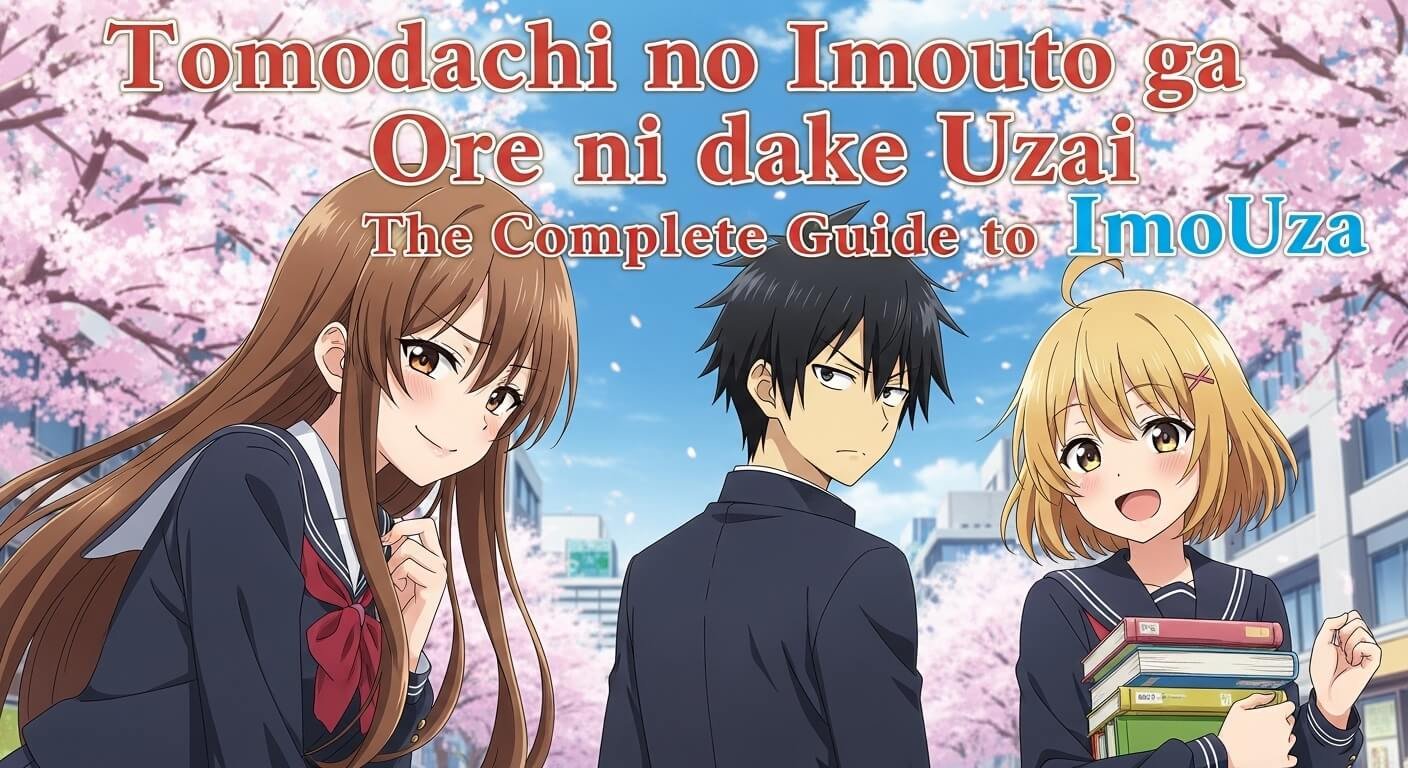
Tomodachi no Imouto ga Ore ni Dake Uzai started life as a light novel series, not a manga or anime original.
The Light Novel Series
Written by Ghost Mikawa and illustrated by Tomari, the light novel series began publication in April 2019 under SB Creative’s GA Bunko imprint. The series quickly found an audience thanks to its sharp comedic writing and the dynamic between its leads, and has grown to over ten volumes. The light novel is licensed in North America by J-Novel Club, making it accessible to English readers who want to experience the full story.
The Manga Adaptation
A manga adaptation by Hira Hiraoka began serialization online in December 2019, published through Square Enix’s Manga UP! platform. The manga has been well-received as a faithful adaptation of the source material, with Hiraoka capturing both the comedic timing and the character expressions that make the series work.
The 2025 Anime
The regular TV broadcast started on 5 October 2025, produced by Studio BLADE with Nikkatsu Animation. The first three episodes received an early screening at a special event on 6 September 2025 at United Cinemas Toyosu in Tokyo, building buzz ahead of the full broadcast. The anime aired during Fall 2025 and ran for 12 episodes of approximately 23 minutes each.
The Story: What Actually Happens
Ooboshi Akiteru is a high school student living by a simple, logical code — efficiency counts above all else and wasting time is a mortal sin to him, especially on illogical social games like teenage romance.
Akiteru isn’t a typical shōnen protagonist chasing dreams of greatness or fighting for justice. His ambitions are more grounded: he wants to secure the future of his independent game development circle, which he and his friends call the 5th Floor Alliance. Their goal is landing positions at a major entertainment company run by Akiteru’s eccentric uncle — a legitimate path to turning their passion into a career.
Then two complications blow his organized life completely apart.
Complication One: Iroha
Kohinata Iroha, the younger sister of his only best friend Ozuma Kohinata, pesters Akiteru daily to the point he finds himself caught up in all kinds of troublesome situations. She practically invades his space — showing up at his home, sitting on his bed, teasing him with sharp-tongued commentary at every opportunity. At school, she’s a picture of virtue. The moment she’s around Akiteru, the mask comes completely off.
What makes the dynamic genuinely compelling is that Iroha’s behavior isn’t cruel — it’s targeted and oddly intimate. She doesn’t bother anyone else this way. Only him. That specific detail raises a question the series takes its time answering: why him?
Complication Two: Mashiro
Akiteru is asked by his uncle to start a relationship with his cousin, Mashiro Tsukinomori, in exchange for his providing support for his game development group. Mashiro is a beautiful girl transferring to his school to escape a troublesome past — and she openly despises him from the moment they meet. The fake relationship is entirely transactional, a business arrangement wrapped in the awkward packaging of teenage romance.
So there he is: a pragmatist surrounded by chaos, trying to stay focused on his future while a girl who claims to find him annoying occupies an increasingly large portion of his mental space.
The Characters
Akiteru Ooboshi
Akiteru works as a protagonist precisely because he isn’t performing the typical shōnen energy. He’s calm, analytical, sometimes dense in the way only a boy who has decided to opt out of romance entirely can be. His efficiency-first worldview creates natural comedic friction with every situation the story throws at him, and watching that worldview slowly crack is the show’s quiet emotional engine.
Iroha Kohinata
Iroha is the clear standout of the series. Her dual-persona nature — perfect student vs. relentless pest — is the kind of character concept that could easily feel gimmicky. What saves it is the writing beneath the gimmick. Her facial expressions are incredibly rich: from the sickly-sweet smile of an honor student, to a malicious grimace when she teases Akiteru, all the way to moments of genuine embarrassment. Those moments of genuine embarrassment matter. They’re the cracks that reveal what’s actually going on underneath all the teasing.
Mashiro Tsukinomori
Mashiro is the dark-horse character of the series. She enters the story hostile and guarded, and peeling back why she is the way she is becomes one of the more emotionally resonant threads as the episodes progress. Her dynamic with Akiteru shifts in ways that surprise, and her presence keeps the romantic question genuinely open rather than resolved before it begins.
Ozuma Kohinata
Akiteru’s best friend and Iroha’s older brother occupy the underrated supporting role. He’s perceptive enough to notice what others miss but tactful enough not to say it outright — exactly the kind of friend a protagonist like Akiteru doesn’t deserve but desperately needs.
The 2025 Anime: Production and Reception
The anime adaptation arrived in Fall 2025 with reasonable expectations and largely delivered on them.
Studio BLADE’s Work
Direction was entrusted to Koga Kazuomi, a creator who previously directed titles such as Kanojo, Okarishimasu and Kubo-san wa Mob wo Yurusanai. His genre experience shows in how the show is framed — he understands the visual language of romantic comedy and uses it effectively. The character design, handled by Satou Katsuyuki, fairly faithfully reproduces the original illustrations by Tomari from the light novel, preserving the soft, distinctive art style that fans of the source material recognized and appreciated.
The standout visual moment of the entire run comes in the finale. The final theatrical performance in episode 12, utilizing projection mapping created by Ozuma, is a visual gem — lighting effects and fluidity of movement in this sequence show that when the studio wants to, it can reach great heights.
Voice Cast
The Japanese voice cast brought the characters to life with notable performances. Kana Hanazawa, one of anime’s most recognizable voice actresses, is part of the cast, lending her considerable experience to the production. Tomori Kusunoki voices Iroha, delivering a performance that handles the comedic sharpness and the quieter emotional moments with equal ability.
Reception
The series holds a 6.1/10 on IMDb — a score that reflects the genre rather than the quality. Romantic comedy anime consistently rate mid-range on general platforms because the audience watching them isn’t trying to compare them to action epics. Within the genre community, the reception was warmer. The show earned a 7.66/10 rating on LiveChart from viewers who came in knowing what to expect and found a series that delivered it well.
What Makes Tomodachi no Imouto ga Ore ni Dake Uzai Worth Watching
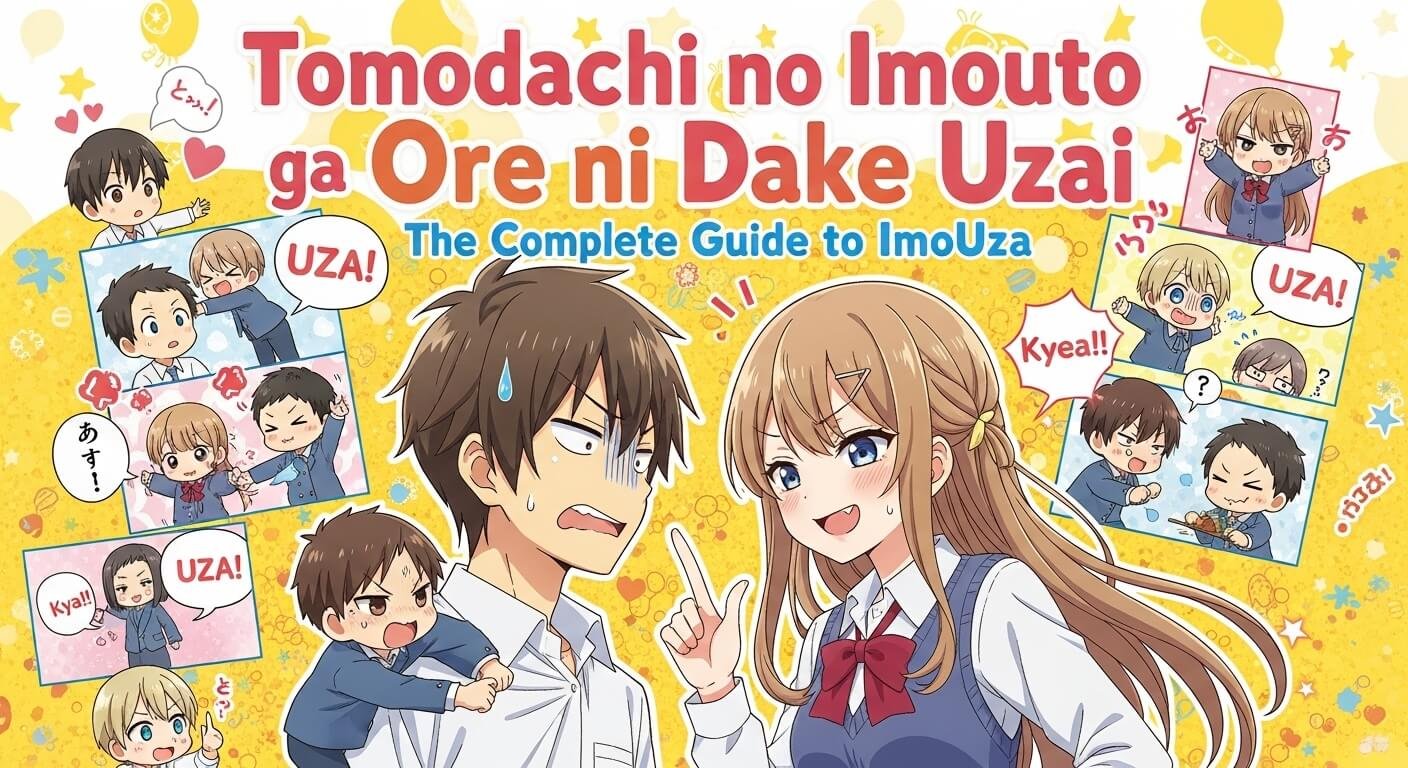
Romantic comedies live and die by their central dynamic. If the leads don’t generate a genuine spark, no amount of clever plotting saves it. ImoUza succeeds because Iroha and Akiteru are genuinely interesting together — not just because she pesters him, but because the pestering means something that the story is patient about revealing.
Tomodachi no Imouto ga Ore ni Dake Uzai is primarily a comedy, but beneath the layer of jokes and the titular uzai (annoyance), it smuggles in mature observations about social masks and the fear of rejection. That’s the thing about the series that surprises people who come in expecting pure gag-driven entertainment. There’s genuine emotional intelligence underneath the comedy.
Here’s what the show does well that separates it from genre filler:
- The “why” is always present. Iroha’s behavior isn’t random chaos — there’s a coherent emotional logic to it that the show rewards patient viewers for noticing
- Akiteru is never made to look stupid. He’s dense about romance specifically, not about everything, which keeps him likable rather than frustrating
- The supporting cast earns its screen time. Nobody in the 5th Floor Alliance feels like furniture
- The comedy has genuine timing. Jokes land because the show understands spacing and character-specific humor, not just setup-punchline repetition
Where to Watch and Read ImoUza
Watch the anime: The anime is available on Crunchyroll for international viewers. All 12 episodes of the Fall 2025 season are available to stream.
Read the light novel: The light novel series is licensed in English by J-Novel Club, available through their platform digitally and in print through select retailers.
Read the manga: The Hira Hiraoka manga adaptation is available through various manga reading platforms and is worth reading for fans who want the full visual adaptation of the source material.
Final Thoughts
Tomodachi no Imouto ga Ore ni Dake Uzai is exactly the kind of anime that gets underestimated because of its genre and overlooked because it arrived in a competitive season. That’s a shame, because it’s genuinely one of the better romantic comedies of recent years.
Iroha is a fantastic character. The premise is sharper than it sounds. And the emotional undercurrent that runs beneath all the teasing and chaos gives the series a weight that purely comedic shows can’t match.
If you like romantic comedy anime and you haven’t checked out ImoUza yet, this is your sign to start. Just don’t be surprised when what begins as a story about a girl being annoying ends up being something considerably more interesting than that.