Introduction
Umineko When They Cry stands as one of the most intellectually demanding and emotionally complex visual novels ever created. Released between 2007 and 2010 by 07th Expansion, this doujin (independent) murder mystery has cultivated a devoted following that still debates its mysteries and themes more than a decade later.
If you’ve heard whispers about an impossible murder mystery involving witches, meta-narratives, and philosophical debates about truth itself, you’ve encountered references to this sprawling epic that refuses to give easy answers.
What Exactly Is Umineko?
Umineko is a sound novel—a visual novel format emphasizing music and text over extensive visuals—telling the story of the wealthy Ushiromiya family gathering on their private island for a family conference in 1986. What begins as family drama quickly transforms into a locked-room murder mystery when typhoon conditions trap everyone on the island and people start dying.
The twist: a letter appears claiming responsibility for the murders in the name of Beatrice, the Golden Witch, complete with impossible circumstances that seem to defy rational explanation. The protagonist Battler Ushiromiya refuses to accept supernatural explanations, engaging in elaborate debates with the witch herself about whether magic or human tricks caused each death.
The story spans eight episodes released across four years, totaling well over 100 hours of reading. Each episode builds on previous installments while introducing new layers of complexity, mystery, and meta-textual commentary.
The Two-Arc Structure
Umineko divides into two major arcs of four episodes each:
Question Arcs (Episodes 1-4): Present increasingly elaborate murder scenarios on Rokkenjima island, each iteration resetting the timeline while building the overarching mystery and introducing central themes.
Answer Arcs (Episodes 5-8): Shift perspective and narrative structure, forcing readers to confront what constitutes truth, whether definitive answers matter, and what they really want from the story.
This structure intentionally frustrates readers expecting conventional mystery resolution, making Umineko as much about the nature of mystery fiction as an actual mystery to solve.
The Core Appeal: Why People Become Obsessed
Umineko hooks readers through multiple interconnected elements that work together to create something genuinely unique in visual novel space.
Intellectual Challenge
The mystery presents fair-play puzzle elements where attentive readers theoretically possess all information needed to solve the crimes. Umineko respects reader intelligence while constructing scenarios complex enough to sustain years of community debate.
The story includes explicit rules governing what can and cannot happen, creating a framework for logical deduction. Knox’s Decalogue and Van Dine’s Twenty Rules—real meta-fictional commandments for detective stories—appear directly in the narrative.
Readers become detectives themselves, scrutinizing every detail, analyzing character motivations, and constructing elaborate theories. This active engagement transforms passive reading into intellectual sport.
Meta-Narrative Innovation
Umineko operates on multiple narrative layers simultaneously. Characters aware of being in a story debate with readers (represented by in-universe avatars) about interpretation, truth, and the purpose of mystery fiction itself.
This meta-textual approach allows the story to examine fundamental questions:
- Do mysteries require definitive solutions?
- Who has authority to determine truth in fiction?
- What obligations do authors have toward readers?
- Can subjective interpretation be as valid as objective fact?
These philosophical inquiries elevate Umineko beyond standard murder mystery into something resembling literary fiction disguised as genre entertainment.
Character Complexity and Development
The massive cast of Ushiromiya family members, servants, and supernatural entities all receive substantial development across the eight episodes. Characters who seem simple initially reveal unexpected depths as the story progresses.
Battler’s journey from brash skeptic to someone grappling with the nature of truth itself drives much of the emotional core. Beatrice evolves from apparent villain into something far more complex and tragic.
The supporting cast—from the caustic detective Erika to the devoted servant Shannon to Battler’s cousins—all carry their own mysteries, motivations, and character arcs that intersect with the central narrative.
The Music: An Underrated Masterpiece
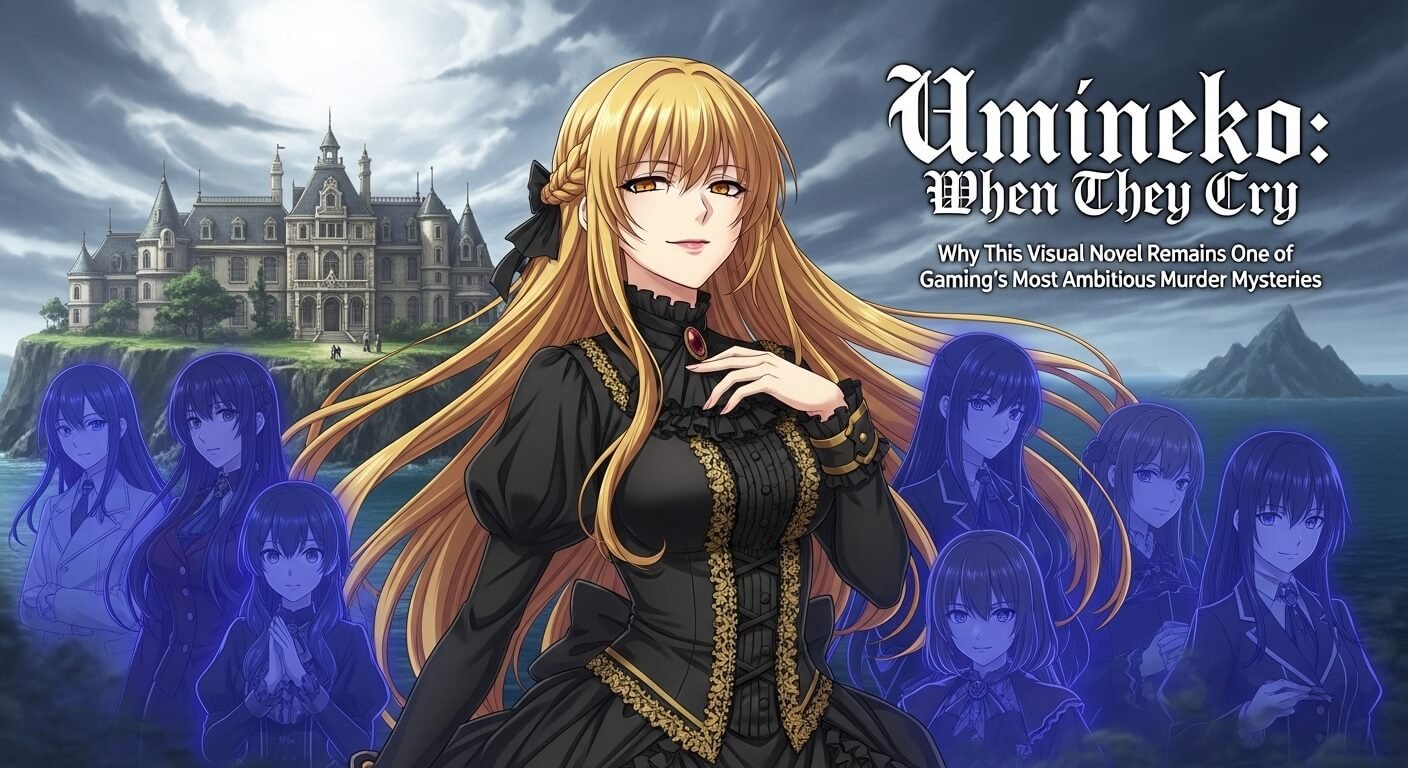
Umineko’s soundtrack deserves special attention as one of visual novels’ greatest musical achievements. Composer ZTS and the 07th Expansion sound team created over 200 tracks across eight episodes, ranging from haunting piano pieces to aggressive rock to orchestral arrangements.
Key tracks like “worldenddominator,” “golden slaughterer,” and “hope” have become iconic within visual novel communities. The music doesn’t just accompany scenes—it actively enhances emotional impact and thematic resonance in ways few visual novels achieve.
The sound design philosophy treats music as a narrative element rather than mere background. Specific character themes, location motifs, and conceptual leitmotifs recur throughout, rewarding attentive listeners who notice how musical callbacks reinforce story connections.
Emotional Manipulation Through Sound
Umineko uses music to devastating effect during key emotional moments. The contrast between cheerful family scenes with warm piano and horrific murder revelations with distorted, aggressive tracks creates whiplash that reinforces the story’s central tension between happy memories and terrible present circumstances.
Certain tracks become emotionally loaded through repeated association with specific story beats, so their recurrence in later episodes triggers powerful responses even before dialogue or visuals provide context.
The Controversy: Answers vs. Ambiguity
No discussion of Umineko can avoid addressing the massive fan controversy surrounding its ending and approach to mystery resolution.
What Readers Expected
Traditional mystery stories provide clear solutions where detectives explain exactly what happened, who did it, and how. Readers invested 100+ hours in Umineko expecting similar payoff for their intellectual investment.
The series explicitly positioned itself as a fair-play mystery, suggesting solutions existed and attentive readers could discover them. This created expectations that certain answers would eventually be confirmed.
What Umineko Delivered
The final episodes provide significant revelations and context but deliberately refuse to confirm every detail explicitly. The story argues that some truths matter more than factual accuracy, and that love and understanding can transcend the need for definitive answers.
This thematic conclusion frustrated readers who wanted confirmation of their theories or clear statements about what “really” happened during the murders. The ambiguity felt like betrayal to some, while others considered it the only honest ending possible given the story’s themes.
The Community Divide
The Umineko fanbase remains split between:
Team Answers: Readers who believe definitive solutions exist in the text and work to prove their interpretations through textual evidence and logical deduction.
Team Themes: Readers who accept ambiguity as intentional and thematically appropriate, focusing on emotional and philosophical elements over factual mystery resolution.
Both sides present compelling arguments, and the debate itself arguably proves Umineko succeeded in creating something genuinely thought-provoking that resists easy categorization.
How Umineko Compares to Alternatives
Understanding Umineko’s position within visual novels and mystery fiction helps set appropriate expectations.
Vs. Higurashi When They Cry
Umineko’s spiritual predecessor from the same creator shares structural similarities but delivers very different experiences:
Higurashi strengths:
- More accessible entry point
- Clearer mystery resolution
- Horror-focused atmosphere
- Faster pacing in early episodes
Umineko advantages:
- More complex mystery construction
- Deeper thematic exploration
- Superior music and presentation
- More ambitious narrative scope
Readers who need clear answers often prefer Higurashi, while those comfortable with ambiguity gravitate toward Umineko’s complexity.
Vs. Traditional Detective Fiction
Compared to classic mystery novels, Umineko both honors and subverts genre conventions:
- Respects fair-play principles while questioning whether they actually matter
- Provides logical puzzle elements alongside supernatural uncertainty
- Features detective characters who themselves become subjects of investigation
- Treats mystery solving as philosophical exercise rather than simple puzzle completion
Readers expecting Agatha Christie will find familiar elements but also fundamental challenges to mystery fiction’s assumptions.
Vs. Other Meta-Narratives
Works like Doki Doki Literature Club or The Stanley Parable also employ meta-fictional techniques, but Umineko’s approach differs significantly:
- Integrates meta-commentary into story fabric rather than using it primarily for shock value
- Sustains meta-narrative across 100+ hours instead of brief experiences
- Balances meta-elements with genuine emotional investment in characters
- Uses self-awareness to examine serious philosophical questions
The length and sustained complexity make Umineko’s meta-narrative more developed than most alternatives.
Getting Started: Practical Considerations
If you’re considering diving into Umineko, several practical factors deserve consideration before committing to this massive undertaking.
Time Investment Reality
Umineko requires serious time commitment. Conservative estimates suggest:
- Episodes 1-4: 50-60 hours
- Episodes 5-8: 50-60 hours
- Total: 100-120 hours minimum
Rushing through diminishes the experience since details matter enormously. Plan for several months of regular reading rather than marathon sessions.
Available Versions
Original Japanese release: The definitive version for those who can read Japanese or don’t mind machine translation limitations.
MangaGamer English release: Official localization with updated graphics and voice acting, though the translation quality receives mixed reviews for certain character voices.
PS3 version with patches: Combines superior graphics and voice acting from the console release with improved fan translations, generally considered the best English experience.
Manga adaptation: Covers the full story with excellent art and clearer explanations of certain plot points, though losing some narrative complexity.
Anime adaptation: Generally considered poor quality that rushes through early episodes and never adapts the crucial second half. Not recommended as primary experience.
Starting Episode Expectations
Episode 1 serves as foundation and moves slowly compared to later installments. Readers should understand:
- First 2-3 hours focus on family drama before murders begin
- Character introductions feel tedious but become crucial later
- The supernatural elements don’t dominate immediately
- Full payoff requires continuing through all eight episodes
Many readers struggle with Episode 1’s pacing but find Episodes 2-4 increasingly gripping once investment builds.
Common Pitfalls and How to Avoid Them
New readers often make mistakes that diminish their Umineko experience.
Seeking Spoilers Too Early
The temptation to check wikis or forums for clarification during confusion is strong, but spoilers devastate the carefully constructed mystery. Confusion is often intentional, resolved in later episodes.
Trust that confusing elements will receive context eventually, even if that “eventually” means 40 hours later. The payoff depends on discovering revelations organically.
Obsessing Over Every Detail
While details matter, trying to analyze every single line on first read leads to burnout. The story expects rereading, where earlier scenes gain new meaning with later context.
First read should focus on enjoying the experience and forming general impressions. Deep analysis works better on subsequent playthroughs when you know what actually matters.
Expecting Traditional Mystery Structure
Umineko repeatedly subverts expectations about how mysteries should function. Readers rigidly attached to conventional detective story formulas will feel frustrated.
Approaching it as philosophical examination of mystery fiction rather than straightforward whodunit creates more satisfying experience aligned with authorial intent.
Taking Forums Too Seriously
Online Umineko communities contain brilliant analysis alongside crackpot theories and shipping wars. Engaging with discussion enhances appreciation but shouldn’t replace forming your own interpretations.
Reading others’ theories before finishing all episodes often spoils revelations or creates biased expectations that diminish personal discovery.
The Themes That Make Umineko Resonate
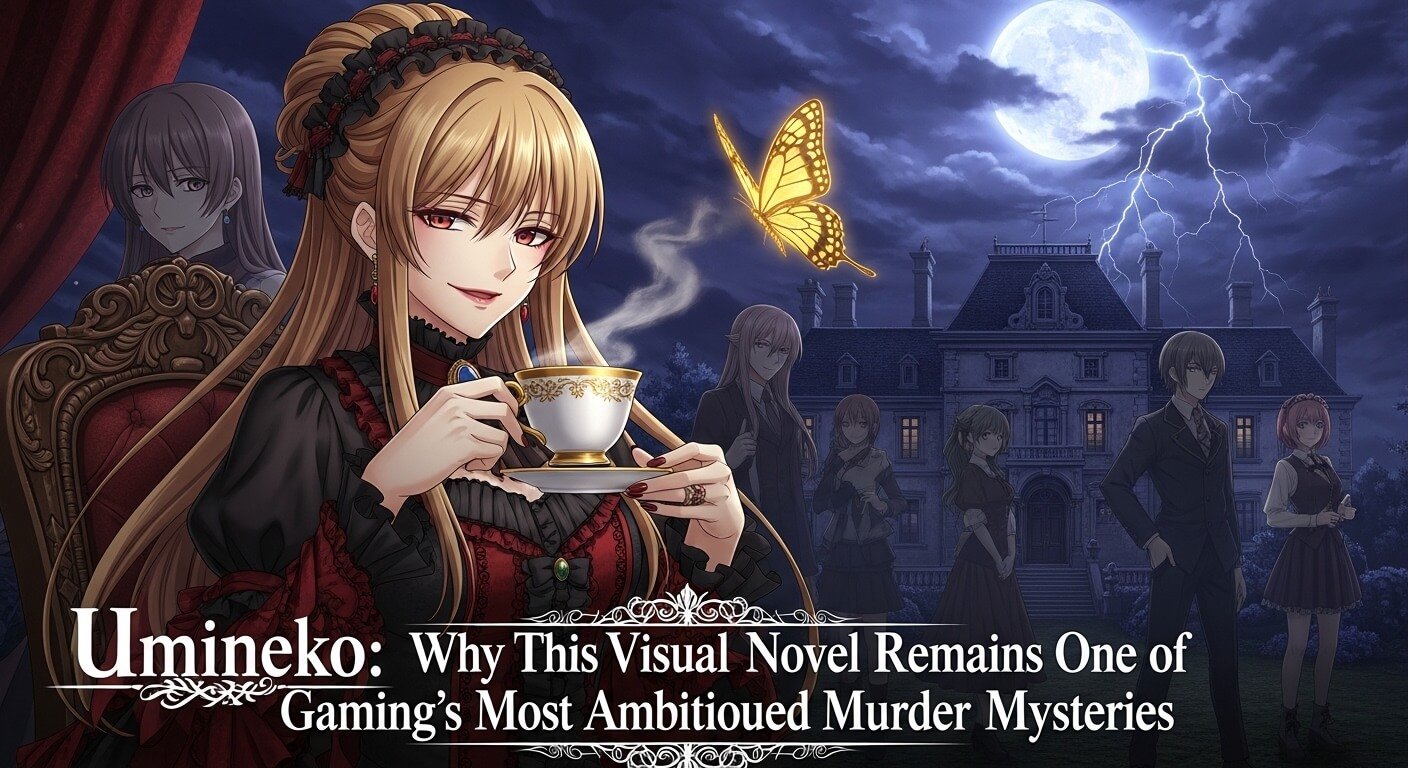
Beyond the mystery mechanics, Umineko explores profound themes that explain its lasting impact.
Truth and Love
The story repeatedly contrasts cold, factual truth with emotional truth based on love and trust. Can understanding someone’s heart matter more than knowing exact events? Does insisting on harsh facts sometimes cause more harm than accepting comfortable interpretations?
These questions have no easy answers, and Umineko refuses to provide them. It asks readers to consider what they truly value when seeking truth.
Without Love, It Cannot Be Seen
This phrase—Umineko’s central motto—operates on multiple levels. Literally, it suggests that understanding requires empathy and care rather than just cold logic. Metaphorically, it implies that seeing truth demands viewing situations through loving eyes.
Different readers interpret this phrase differently, but all recognize its importance to understanding what Umineko ultimately communicates.
The Relationship Between Author and Reader
By making the battle between Battler and Beatrice mirror relationships between readers and authors, Umineko examines the implied contract in fiction. What does a writer owe their audience? What authority do readers have to demand specific answers?
These meta-textual questions make Umineko as much about storytelling itself as the specific story being told.
Should You Read Umineko?
This question requires honest self-assessment about your preferences, patience, and tolerance for ambiguity.
You’ll Probably Love It If You:
- Enjoy complex mysteries that respect your intelligence
- Appreciate philosophical questions embedded in genre fiction
- Don’t need every plot thread explicitly resolved
- Value emotional depth alongside intellectual challenge
- Have 100+ hours available for a single story
- Like analyzing and discussing fiction with communities
- Appreciate experimental narrative structures
You’ll Probably Dislike It If You:
- Need clear, definitive answers to all questions
- Prefer fast-paced action over deliberate character development
- Find meta-fictional elements pretentious or annoying
- Want straightforward mystery without philosophical digression
- Lack time for massive time investment
- Dislike visual novel format
- Expect anime adaptation to suffice
The Honest Assessment
Umineko represents visual novels at their most ambitious and divisive. It reaches for literary significance beyond most genre entertainment while remaining firmly rooted in visual novel conventions and aesthetics.
Some moments achieve genuine brilliance—scenes of emotional catharsis, clever mystery construction, and thematic depth that stick with readers for years. Other moments drag, confuse, or frustrate even devoted fans.
The experience demands active participation, patience, and willingness to engage with challenging ideas. It rewards these efforts inconsistently but memorably when it succeeds.
The Lasting Legacy
More than a decade after completion, Umineko maintains active fan communities creating theories, fan art, music arrangements, and discussion. This longevity speaks to meaningful impact despite divisive elements.
The work influenced subsequent visual novels’ willingness to experiment with meta-narratives and ambiguous endings. It demonstrated that doujin works could achieve complexity rivaling or exceeding commercial productions.
Whether Umineko represents visual novels’ highest achievement or most frustrating missed opportunity depends entirely on what you value in fiction. What’s undeniable is that it swings for the fences with ambition few works match, and even its failures prove more interesting than most success stories in the medium.
For readers seeking safe, comfortable entertainment, Umineko offers the wrong experience entirely. For those wanting fiction that challenges, provokes, and refuses to provide easy comforts, few works deliver more thoroughly or memorably than this impossible mystery about witches, truth, and the stories we tell ourselves to survive unbearable realities.