Introduction
Long before Gundam, Evangelion, or any modern mecha anime existed, Tetsujin 28 pioneered the giant robot genre that would become synonymous with Japanese pop culture. Created by manga artist Mitsuteru Yokoyama in 1956, this remote-controlled robot and its young operator introduced concepts that still influence robot fiction today.
If you’ve ever wondered where the giant robot genre began or why Japanese media became so obsessed with mechanical warriors, understanding Tetsujin 28 provides essential historical context and reveals surprising depth beneath its seemingly simple premise.
What Exactly Is Tetsujin 28?
Tetsujin 28 translates to “Iron Man Number 28” and tells the story of a giant robot created as a weapon during World War II. The robot falls into the hands of young Shotaro Kaneda, who controls it via a remote control device while solving crimes and fighting various threats in post-war Japan.
The original manga ran from 1956 to 1966 in Shonen magazine, becoming one of the most influential works in manga history. The premise was revolutionary: a giant robot controlled externally rather than piloted from within, essentially making it a remote-controlled weapon at massive scale.
What made Tetsujin 28 particularly interesting was its moral neutrality. The robot itself possessed no artificial intelligence or personality—it simply obeyed whoever held the controller. This created storylines where villains could steal control, forcing Shotaro to fight his own robot or compete for remote control dominance.
The Historical Context
Post-war Japan grappled with technological advancement, militarization consequences, and recovery from atomic bombing. Tetsujin 28 emerged from this environment, featuring a weapon originally designed for wartime use being repurposed for peacetime protection.
The robot represented both Japan’s technological ambitions and anxieties about weaponry. Unlike later heroic robots with personalities, Tetsujin 28 remained fundamentally a tool—powerful, useful, but also dangerous in the wrong hands.
This thematic complexity gave the series surprising depth beyond simple action stories, addressing questions about technology, control, and responsibility that remain relevant today.
The Evolution Across Different Media
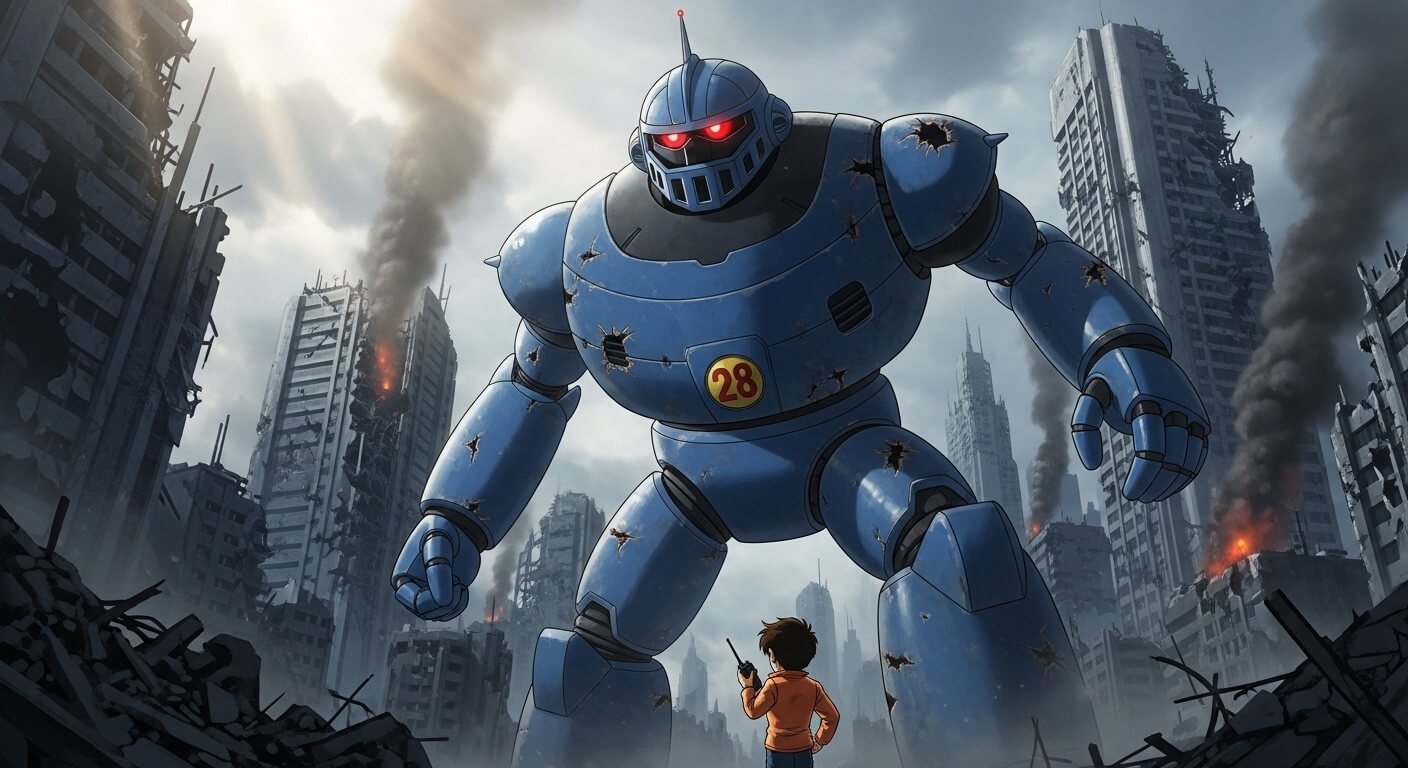
Tetsujin 28 has been adapted numerous times across seven decades, with each version reflecting the era in which it was created.
The Original 1963 Anime
The first anime adaptation aired from 1963 to 1966, running for 97 episodes. This black-and-white series brought the manga to television screens and established many visual conventions for giant robot anime.
The animation quality varied wildly by modern standards, with limited movement and extensive use of static shots. However, for early 1960s television anime, it represented cutting-edge production.
This version reached American audiences as “Gigantor” with significant changes, including completely rewritten dialogue, new theme music, and altered character names. The English adaptation introduced many Western viewers to Japanese giant robot concepts, though they didn’t know it at the time.
The 1980 Remake
A color remake aired in 1980, updating the visuals while maintaining the basic story structure. This 51-episode series introduced Tetsujin 28 to a new generation with improved animation and production values.
The 1980 version made the robot’s design more mechanical and detailed compared to the simpler original. Character designs became more typical of 1980s anime aesthetics while retaining core elements from Yokoyama’s original artwork.
This adaptation performed well commercially and kept Tetsujin 28 relevant during the mecha boom years dominated by Gundam and Macross franchises.
The 2004 Modern Interpretation
Director Yasuhiro Imagawa created a darker, more mature Tetsujin 28 series in 2004 that ran for 26 episodes. This version emphasized the post-war setting more explicitly, examining themes of war guilt, technological responsibility, and childhood trauma.
The 2004 anime featured:
- Period-accurate 1950s Japanese setting and aesthetics
- Significantly darker tone addressing war consequences
- More complex characterization for Shotaro and supporting cast
- Faithful robot design honoring Yokoyama’s original
- Higher production values and consistent animation quality
This version is often considered the best adaptation by critics, though it remains less known than other iterations due to limited international distribution.
The 2007 Live-Action Film
A live-action Tetsujin 28 film directed by Shin Togashi combined CGI for the robot with live actors. Set in 1960s Japan, it took a nostalgic approach emphasizing the optimism of the era.
The film received mixed reviews, praised for impressive CGI work on the robot but criticized for pacing issues and underdeveloped characters. It performed moderately at the Japanese box office without becoming a major hit.
How Tetsujin 28 Influenced the Mecha Genre
The impact of Tetsujin 28 on Japanese robot fiction cannot be overstated. It established fundamental concepts that countless subsequent works built upon or reacted against.
The Remote Control Concept
Tetsujin 28’s remote-controlled nature created unique storytelling opportunities. Unlike piloted robots where the operator’s skill determines success, Tetsujin 28 battles often became contests for possession of the controller itself.
This introduced moral ambiguity—the robot wasn’t inherently good or evil. It simply followed commands from whoever controlled it, making theft of the remote control a recurring plot device that forced Shotaro to reclaim control or destroy his own robot.
Later series like Giant Robo borrowed this concept directly, while others inverted it by creating internally piloted robots that specifically required their designated pilots.
Post-War Technology Themes
The idea of wartime weapons repurposed for peace became a recurring mecha theme. Tetsujin 28 being “Number 28” implied twenty-seven previous attempts, suggesting a military research program that Shotaro inherited.
Series like Mobile Suit Gundam, Patlabor, and Neon Genesis Evangelion all explore military technology in civilian or defensive contexts, continuing conversations Tetsujin 28 started about technological responsibility and control.
Child Operators and Responsibility
Having a young protagonist control an enormously powerful weapon introduced themes about responsibility, maturity, and the burden placed on children. Shotaro had to make life-and-death decisions while processing his father’s death and his inheritance of dangerous technology.
This became a staple of mecha anime, from Amuro Ray in Gundam to Shinji Ikari in Evangelion. The psychological weight of operating devastating weapons as a child or teenager became central to many subsequent robot series.
Comparing Tetsujin 28 to Later Robot Franchises
Understanding how Tetsujin 28 differs from what followed helps clarify its unique position in mecha history.
Vs. Mazinger Z and Super Robots
Mazinger Z (1972) introduced the super robot genre where pilots sat inside robots with nearly unlimited power. These robots typically had personalities, special attacks with dramatic names, and heroic narratives.
Tetsujin 28 characteristics:
- Remote controlled from outside
- No personality or AI
- Morally neutral tool
- Realistic limitations on power
- Grounded in post-war reality
Mazinger Z characteristics:
- Internally piloted cockpit
- Heroic personality and presence
- Clear good vs. evil narratives
- Unlimited energy and super weapons
- Fantastical science fiction setting
Mazinger Z and its successors embraced spectacle and heroism, while Tetsujin 28 maintained more grounded, ambiguous storytelling.
Vs. Mobile Suit Gundam and Real Robots
Mobile Suit Gundam (1979) revolutionized mecha anime by treating robots as realistic military vehicles called “mobile suits” rather than superheroic entities. This created the “real robot” subgenre emphasizing war, politics, and realistic technology.
Tetsujin 28 actually shares more with real robot sensibilities despite predating the category:
- Robot as weapon/tool rather than hero
- Military origins and applications
- Technology that could theoretically exist
- Consequences of warfare and weaponization
- Political and social contexts affecting robot use
However, Gundam’s internally piloted mobile suits and space opera settings created very different viewing experiences despite thematic similarities.
Vs. Neon Genesis Evangelion
Evangelion (1995) deconstructed mecha tropes while examining psychological trauma, responsibility, and the costs of forcing children to fight. These themes trace directly back to Tetsujin 28’s original exploration of similar concepts.
Both series feature:
- Young operators burdened with enormous responsibility
- Technology with military origins used defensively
- Psychological costs of combat on children
- Ambiguous relationships between operator and machine
- Post-war/post-catastrophe settings
Evangelion explicitly references Tetsujin 28 in its opening sequence, acknowledging the debt modern mecha anime owes to Yokoyama’s creation.
The Character of Shotaro Kaneda
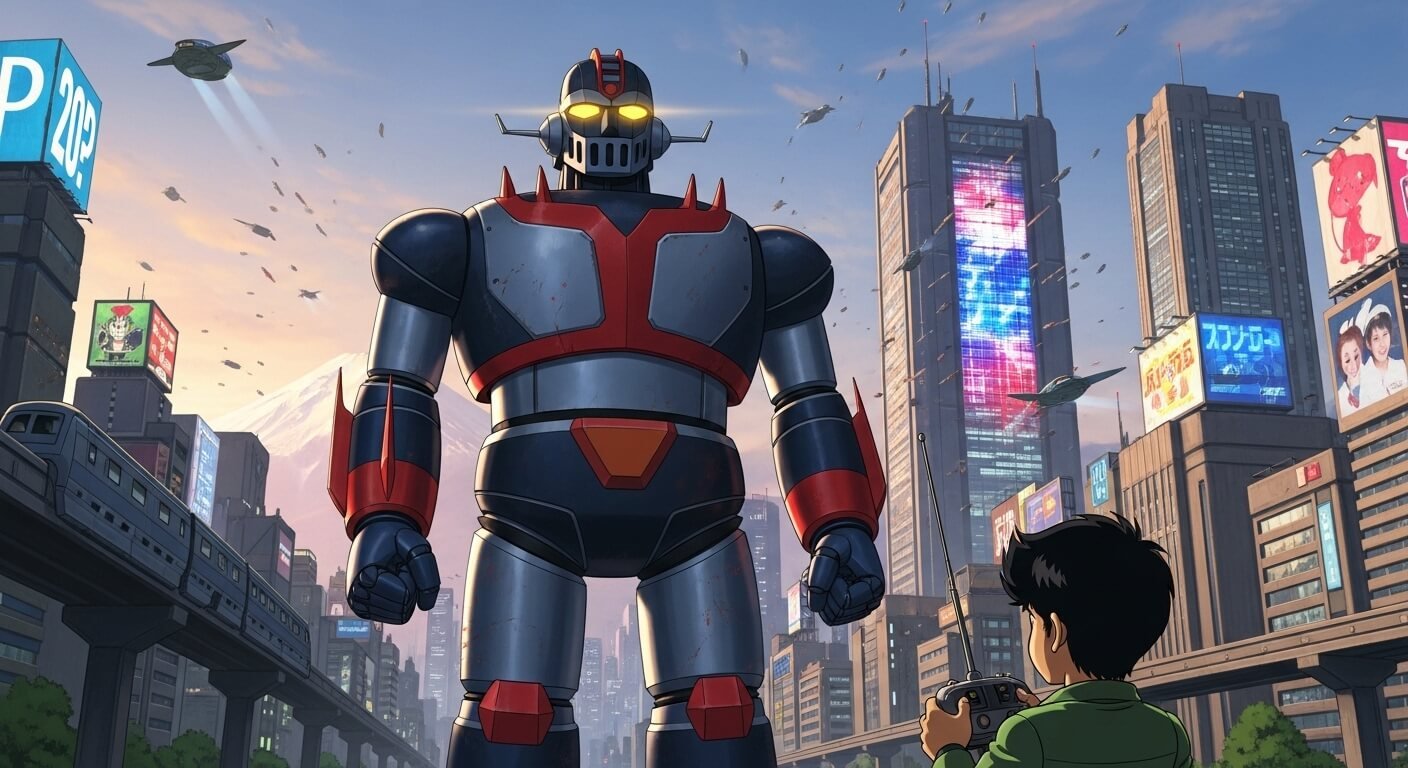
Shotaro’s characterization across versions reveals changing attitudes toward child protagonists and responsibility themes.
Original Manga Version
Yokoyama’s Shotaro was a relatively simple character—brave, resourceful, but not particularly deep psychologically. He served primarily as the viewpoint character through which readers experienced robot action.
The manga focused more on adventure and mystery-solving than Shotaro’s internal emotional life. His age varied across the series but he remained a capable boy detective type common in Japanese children’s media.
1963 Anime Shotaro
The original anime maintained this relatively straightforward characterization. Shotaro was heroic, clever when needed, and appropriately brave for a children’s action show.
American adaptation Gigantor renamed him “Jimmy Sparks” and made him even simpler, removing most complexity in favor of basic good-vs-evil storytelling.
2004 Anime Depth
Director Imagawa’s version transformed Shotaro into a legitimately complex character dealing with grief, responsibility beyond his years, and the moral weight of controlling a weapon.
This Shotaro struggles with:
- Processing his father’s death
- Understanding Tetsujin 28’s wartime origins
- Making ethical decisions about when to use violence
- Balancing childhood desires with adult responsibilities
- Recognizing the robot as both protector and threat
This characterization aligned Tetsujin 28 with mature mecha anime while honoring the original’s themes about children shouldering adult burdens.
The Design Evolution of the Robot
Tetsujin 28’s visual appearance changed significantly across adaptations, reflecting evolving aesthetic preferences and animation capabilities.
Original Design Philosophy
Mitsuteru Yokoyama’s manga design featured a relatively simple, bulky robot with a cylindrical torso, thick limbs, and minimal detail. The design prioritized function over form—this was a weapon, not a sleek hero.
The simple design served practical purposes for manga production, allowing Yokoyama to draw it consistently across hundreds of chapters. It also made the robot feel mechanical and tool-like rather than alive.
1963 Anime Adaptations
The black-and-white anime maintained the basic design while adding details necessary for animation. The robot moved stiffly, which actually enhanced its mechanical nature and distinguished it from more agile characters.
Limited animation budgets meant Tetsujin 28 often appeared static or moved in simple patterns. This limitation accidentally reinforced the remote-control concept—the robot moved deliberately because Shotaro controlled it externally.
Modern Visual Updates
The 2004 anime deliberately returned to Yokoyama’s original design philosophy while adding detail possible with modern animation. The robot maintained its blocky, functional appearance rather than adopting sleeker contemporary aesthetics.
This decision honored the original while making clear artistic statement: Tetsujin 28 should look like a 1950s weapon, not a modern super robot. The retro-futuristic design became part of the show’s thematic approach to post-war technology.
The 2007 live-action film’s CGI version added realistic weathering, mechanical details, and weight to the design while preserving its iconic silhouette.
Collectibles, Models, and Merchandise
Tetsujin 28’s seven-decade history generated substantial merchandise across multiple generations of fans.
Model Kits and Figures
Numerous companies produced Tetsujin 28 models and figures ranging from simple children’s toys to high-end collector pieces:
Budget options:
- Basic plastic figures (¥1,000-3,000)
- Simple snap-fit model kits
- Gashapon capsule toys
- Trading figures and keychains
Premium collectibles:
- Die-cast metal Super Robot Chogokin figures (¥8,000-25,000)
- Large-scale detailed model kits
- Limited edition statues
- Vintage original toys from 1960s-1980s
The most sought-after collectibles come from the original 1960s era, with mint-condition vintage Tetsujin 28 toys commanding significant prices among collectors.
The Kobe Monument
The city of Kobe, where creator Mitsuteru Yokoyama was born, erected a full-size 15.3-meter tall Tetsujin 28 statue in 2009. This massive monument honors both Yokoyama and serves as a symbol of the city’s recovery from the 1995 earthquake.
The statue has become a tourist attraction and testament to Tetsujin 28’s cultural significance in Japan. It represents how a manga/anime creation can achieve genuine cultural monument status.
Should You Watch Tetsujin 28 Today?
Whether Tetsujin 28 deserves your viewing time depends on your interests, patience with older media, and appreciation for historical context.
Reasons to Watch
Historical significance: Understanding mecha anime history requires experiencing the series that started it all.
Thematic depth: The 2004 version particularly offers a sophisticated examination of war, technology, and responsibility.
Unique approach: The remote-control concept creates different storytelling dynamics than the piloted robot series.
Visual design: The retro-futuristic aesthetic offers a refreshing contrast to modern, sleek robot designs.
Cultural education: Insight into post-war Japanese attitudes toward technology and militarization.
Reasons to Skip
Pacing issues: Especially older versions move slowly by modern standards with episodic storytelling.
Limited availability: Many versions remain difficult to access legally outside Japan.
Dated animation: The 1963 series particularly shows its age in animation quality.
Simple plots: Early versions lack the narrative complexity of modern anime.
Cultural barriers: Some themes and references assume Japanese historical knowledge.
Version Recommendations
For modern viewers, the 2004 anime represents the best entry point. It balances accessibility with thematic depth while honoring the original’s legacy. The improved production values make it watchable by contemporary standards.
Manga enthusiasts should seek out the original Yokoyama manga if available, though translations remain limited. The manga captures the creator’s vision most directly.
Collectors and nostalgia seekers might enjoy the 1963 anime or 1980 remake for historical perspective, though these work better as supplements after experiencing the 2004 version.
The Legacy That Continues
Tetsujin 28 established the template from which decades of robot fiction evolved. Its influence extends beyond direct homages into fundamental assumptions about how robot stories function.
The series proved that mechanical heroes could carry serialized narratives, that robots could serve as vehicles for serious themes, and that children’s entertainment could address complex moral questions. These innovations shaped not just anime but global science fiction.
Modern audiences encountering Mazinger, Gundam, Evangelion, or Pacific Rim experience stories descended from concepts Mitsuteru Yokoyama introduced when he created a remote-controlled robot operated by a grief-stricken boy in 1956. The simplicity of that premise—a big robot controlled by a small remote—contained multitudes of storytelling potential that the genre has spent seven decades exploring.
Whether you choose to experience Tetsujin 28 directly or simply appreciate its historical importance, understanding this series illuminates why giant robots became such an enduring fixture of Japanese pop culture and how science fiction uses mechanical heroes to examine very human questions about power, responsibility, and the technologies we create.