Introduction
You’re watching Demon Slayer for the first time when a powerful swordsman appears on screen, effortlessly cutting through demons that would obliterate normal fighters. Your friend leans over and whispers, “That’s a Hashira.” The word sounds important, but what does it actually mean?
Hashiras represent the pinnacle of demon-slaying ability in one of anime’s most beloved series. These nine elite warriors stand between humanity and total annihilation, wielding unique breathing techniques and fighting skills that border on superhuman. Understanding who the hashiras are, what makes them special, and how they function within the Demon Slayer Corps transforms your appreciation of the entire series.
This comprehensive guide breaks down everything about hashiras, from their cultural significance to individual powers, ranking systems, and impact on the story.
What Are Hashiras?
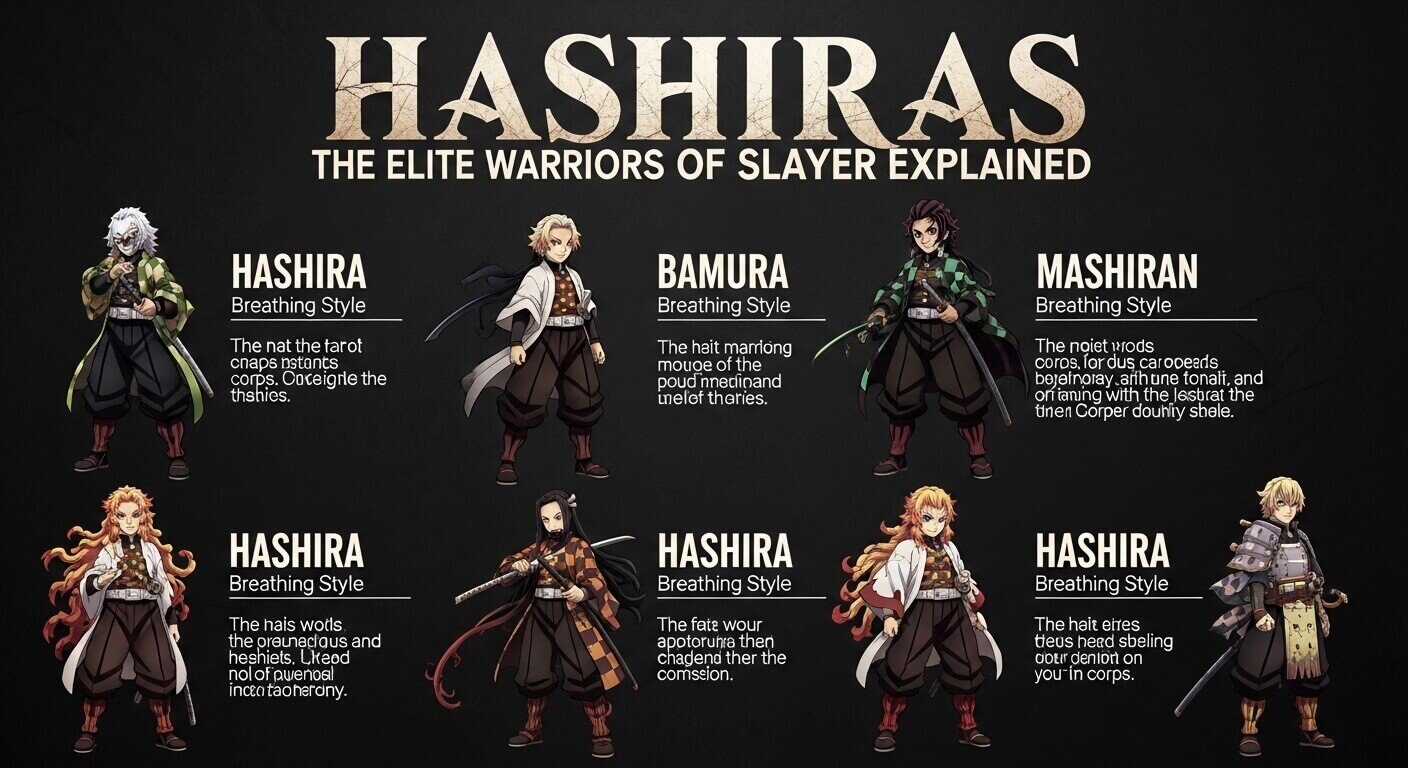
The word “hashira” translates directly to “pillar” in Japanese. The hashiras are the highest-ranking demon slayers in the Demon Slayer Corps, literally serving as the pillars that support the entire organization.
These elite warriors hold authority second only to the Corps leader, Kagaya Ubuyashiki. They patrol specific regions, gather intelligence about demon activity, and handle missions far too dangerous for lower-ranked members.
The Cultural Meaning Behind “Hashira”
The term carries deeper significance than simple translation reveals. In Japanese, “hashira” is the counter word used specifically for counting deities. When you count gods in Japanese, you say “one hashira, two hashira,” not the standard counters used for people or objects.
This linguistic detail isn’t accidental. The hashiras possess power that transcends normal human limitations, placing them in a category closer to divine beings than ordinary warriors.
The kanji character for hashira (柱) combines two elements: “tree” (木) and “master/principal” (主). Together they suggest a main tree or central support, something that bears weight and provides structure.
Ancient Japanese shrine architecture, particularly at Izumo Taisha Grand Shrine, featured nine massive pillars supporting the main sanctuary. Some historical iterations used nine groups of three tree trunks each, creating structures over 48 meters tall. The nine hashiras in Demon Slayer echo this sacred architectural tradition.
The Two Paths to Becoming a Hashira
Achieving hashira status requires extraordinary accomplishment through one of two extremely difficult methods.
Method One: The Kill Count Requirement
A demon slayer must kill at least 50 demons while holding the rank of Kinoe, the highest rank below hashira. This alone requires years of dangerous combat against creatures that can instantly kill experienced fighters.
The average demon slayer takes approximately five years of intense training to reach this threshold. Talented individuals might achieve it in two years, but even this accelerated timeline demands near-superhuman dedication.
Method Two: Defeating a Twelve Kizuki
Alternatively, a demon slayer can achieve hashira rank by single-handedly defeating one of the Twelve Kizuki, the most powerful demons serving directly under Demon King Muzan Kibutsuji.
These demons rank far above normal threats. Lower-ranked demon slayers stand virtually no chance against them. The qualification requires the demon slayer to be the sole victor, meaning group efforts don’t count unless all other participants die.
Sanemi Shinazugawa became a hashira through this method after he and his partner Masachika Kumeno killed Lower Rank One Ubume together. Because Masachika died in the battle, Sanemi alone received the promotion.
The Tsuguko System
A third, unofficial path exists through the tsuguko system. A tsuguko is a designated successor to a current hashira, an apprentice chosen for exceptional talent and potential.
Demon slayers can either apply for tsuguko positions or be scouted by hashiras impressed by their abilities. However, tsuguko can only inherit the hashira rank if their mentor dies or retires, creating a limited number of available positions.
The Nine Current Hashiras
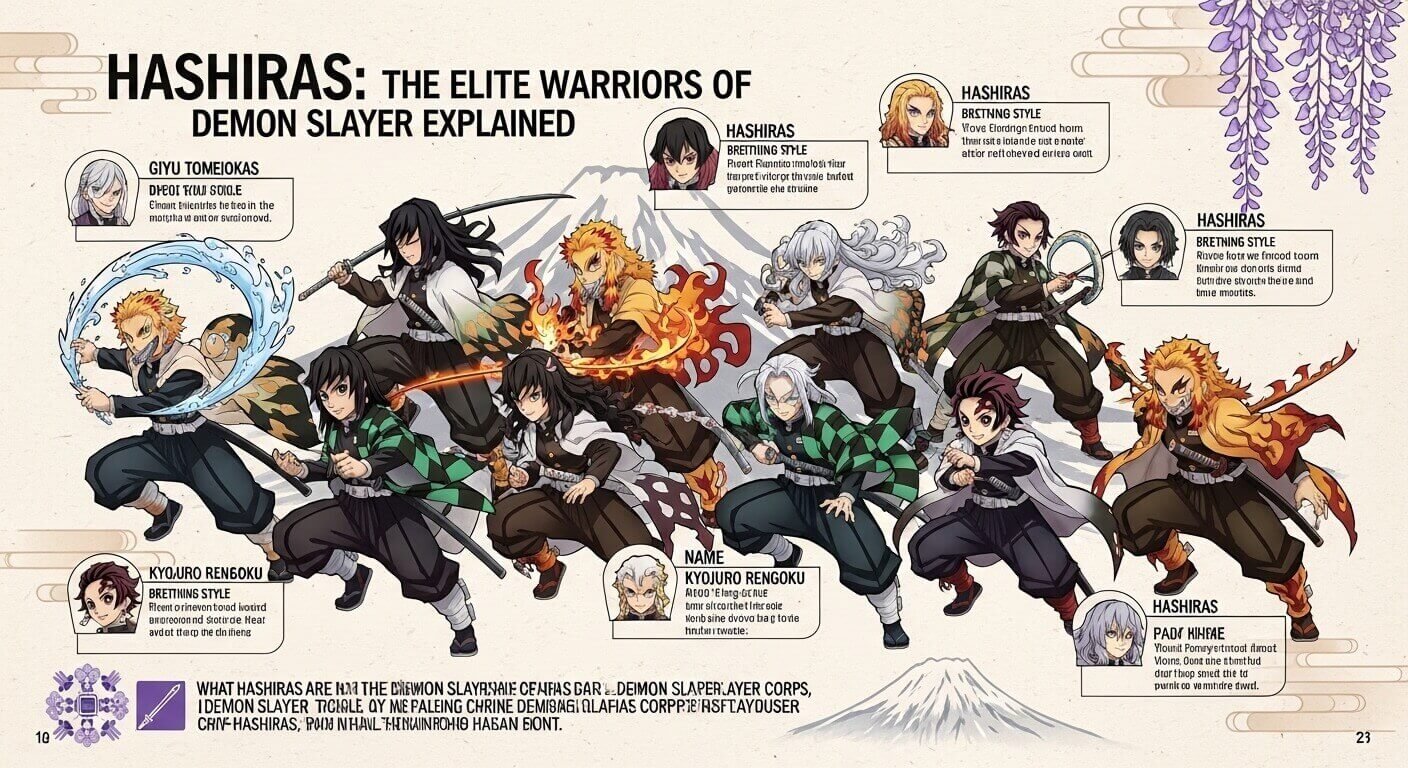
During the main Demon Slayer storyline, nine hashiras actively serve the Corps. Each specializes in a unique breathing technique and brings distinct personality traits to their role.
Giyu Tomioka: The Water Hashira
Giyu is the first hashira protagonist Tanjiro encounters. He saves both Tanjiro and Nezuko from a demon attack, later sparing Nezuko’s life when he recognizes her unusual restraint.
The Water Hashira embodies stoicism and pragmatism. He fights demons without hatred or strong emotion, approaching battles with cold efficiency. His reserved nature often makes him seem aloof, though he possesses deep compassion beneath his stern exterior.
Water Breathing allows Giyu to create flowing water currents from his sword slashes. His techniques adapt fluidly to opponents, making him versatile in combat.
Shinobu Kocho: The Insect Hashira
Shinobu stands out among hashiras for her petite stature and inability to physically decapitate demons, the standard method for killing them. Instead, she developed poison-based combat techniques using Insect Breathing.
Her gentle, always-smiling demeanor masks intense rage over her sister’s murder by the Upper Rank Two demon Doma. She injects demons with wisteria-based toxins that slowly destroy them from within.
Shinobu runs the Butterfly Estate, providing medical care and rehabilitation for injured demon slayers. Her student Kanao Tsuyuri serves as her tsuguko.
Kyojuro Rengoku: The Flame Hashira
Rengoku became a fan-favorite character during the Mugen Train arc. His enthusiastic personality, booming voice, and unwavering optimism made him instantly beloved.
The Flame Hashira believed absolutely in protecting the weak and maintaining hope regardless of circumstances. Unlike some hashiras blessed with natural talent, Rengoku achieved his rank through relentless discipline and training.
He mastered Flame Breathing through pure determination after his father abandoned the technique. During his final battle against Upper Rank Three demon Akaza, Rengoku nearly won through sheer willpower and skill before ultimately dying to protect Tanjiro and other passengers.
Tengen Uzui: The Sound Hashira
Tengen brings flashy style and explosive personality to the hashira ranks. The former ninja comes from a shinobi clan and maintains three wives who assist him on missions.
Sound Breathing combines auditory perception with explosive attacks. Tengen can hear opponents’ movements and analyze combat rhythms, predicting attacks before they land.
During the Entertainment District Arc, Tengen faces Upper Rank Six demons Daki and Gyutaro. Despite losing his left eye and left hand during this battle, he defeats both demons with help from Tanjiro, Zenitsu, and Inosuke. The injuries force his retirement from active duty, though he continues training younger demon slayers.
Mitsuri Kanroji: The Love Hashira
Mitsuri developed Love Breathing, a unique style derived from Flame Breathing. Her cheerful, emotional nature contrasts sharply with more serious hashiras.
Her muscles are eight times denser than average humans, granting superhuman strength despite her slender appearance. She wields a whip-like sword that requires extreme flexibility to control properly.
Mitsuri’s combat contributions during the Swordsmith Village Arc demonstrate her exceptional abilities. She battles Upper Rank Four demon Hantengu while protecting civilians, showcasing both power and compassion.
Muichiro Tokito: The Mist Hashira
Muichiro achieved hashira rank in only two months, making him the fastest to reach this position in Corps history. The 14-year-old prodigy masters Mist Breathing with seemingly effortless skill.
He initially appears cold and detached due to amnesia caused by trauma. After regaining his memories, Muichiro’s personality softens while his combat abilities sharpen further.
His battles against Upper Rank demons reveal tactical brilliance beyond his years. The Mist Hashira combines speed, precision, and creative technique applications that confuse even experienced opponents.
Obanai Iguro: The Serpent Hashira
Obanai is the partially blind Serpent Hashira who keeps his scarred mouth hidden behind bandages. His clan mutilated him as a child to resemble a snake, leaving deep psychological trauma.
Despite his troubles, Obanai masters Serpent Breathing with deadly precision. He fights alongside his snake companion Kaburamaru, who helps compensate for his visual impairment.
The Serpent Hashira maintains strict standards for himself and others, often criticizing fellow hashiras for perceived weaknesses. Only toward Mitsuri does he show genuine warmth.
Sanemi Shinazugawa: The Wind Hashira
Sanemi carries immense anger from watching demons slaughter his family. His violent temperament and bloodlust make him one of the most aggressive hashiras.
Wind Breathing creates devastating cutting attacks that shred demons to pieces. Sanemi’s combat style mirrors his personality: brutal, direct, and merciless.
His rare Marechi blood, which intoxicates demons like alcohol, provides a tactical advantage in battle. Sanemi frequently uses this to bait enemies into mistakes.
Gyomei Himejima: The Stone Hashira
Gyomei stands as the strongest hashira in raw power. The blind warrior towers over others physically and surpasses them in strength.
Despite his imposing size and power, Gyomei is deeply sensitive and emotional. He cries frequently and carries prayer beads, reflecting his religious devotion.
Stone Breathing grants him rock-hard body defenses and devastating offensive capabilities. He wields a spiked flail and hand axe connected by a chain, unique weapons among sword-wielding hashiras.
How Hashiras Function Within the Corps
The hashiras hold multiple responsibilities beyond simply fighting demons. Their role shapes the entire Demon Slayer Corps structure and effectiveness.
Regional Patrol Assignments
Each hashira oversees a specific geographic region. They patrol these areas gathering intelligence about demon activity, population movements, and potential threats.
When demons appear within their territory, hashiras respond first. They assess whether lower-ranked slayers can handle the threat or if hashira intervention is necessary.
Mission Deployment
The Corps deploys hashiras for missions beyond normal demon slayer capabilities. Upper Rank demons, mass casualties, or mysterious demon activities typically require hashira-level intervention.
Lower-ranked members cannot refuse hashira commands. When a hashira issues orders, all demon slayers must comply immediately.
Training Responsibilities
Hashiras occasionally mentor promising demon slayers through the tsuguko system. They also participate in the Hashira Training program, a grueling session designed to improve all Corps members’ abilities.
Each hashira oversees different training aspects:
- Basic stamina and endurance
- Flexibility and agility
- Quick movement and reflexes
- Advanced sword techniques
- Muscle reinforcement
- Specialized breathing practice
Most demon slayers describe this training as “an everlasting trip through hell” due to its extreme difficulty.
The Demon Slayer Mark
Certain hashiras can manifest a special marking during combat that dramatically enhances their abilities. These marks resemble birthmarks and activate under specific conditions.
Activation Requirements
Manifesting a Demon Slayer Mark requires surviving extremely dangerous circumstances. The body must reach a heart rate exceeding 200 beats per minute combined with a body temperature above 39 degrees Celsius (102.2 degrees Fahrenheit).
These conditions typically occur only during life-or-death battles against overwhelmingly powerful demons.
Enhanced Abilities
The mark grants enhanced strength, speed, stamina, and agility. Breathing techniques become more potent, and overall combat effectiveness increases dramatically.
Yoriichi Tsugikuni, the legendary first demon slayer to manifest the mark, could share it with others. The current generation of hashiras gradually awaken their marks during battles in the Infinity Castle.
The Cost
The mark comes with a terrible price. Those who manifest it typically die before reaching age 25. This curse stems from the mark’s origin and the strain it places on the human body.
Only Yoriichi Tsugikuni survived past 25 with an active mark, and his case was exceptional.
Hashira Strength Rankings
While officially equal in rank, hashiras vary significantly in combat ability. Fan discussions constantly debate who ranks strongest, though the manga provides clear answers.
Lower Tier Hashiras
Shinobu Kocho ranks weakest in pure physical strength. Her inability to decapitate demons forces reliance on poison, limiting her effectiveness against certain enemies.
Mitsuri Kanroji, despite exceptional muscle density, lacks the combat experience of older hashiras. Her emotional nature sometimes undermines tactical decisions.
Mid Tier Hashiras
Tengen Uzui demonstrated solid Upper Rank combat capabilities before retirement. His shinobi background provides unique advantages, though he acknowledges limits compared to other hashiras.
Muichiro Tokito’s young age limits his experience despite prodigious talent. He defeats Upper Rank demons but requires assistance against the strongest opponents.
Obanai Iguro and Giyu Tomioka occupy similar strength levels, both capable of extended combat against Upper Ranks.
Top Tier Hashiras
Sanemi Shinazugawa stands among the strongest hashiras. His Wind Breathing mastery rivals the original technique creator, and his rare blood provides tactical advantages.
Gyomei Himejima definitively ranks as the most powerful hashira. His combination of strength, experience, and Stone Breathing mastery makes him nearly unstoppable. Even other hashiras acknowledge his superiority.
The First Generation: The Golden Age of Hashiras
The original hashiras, known as the Golden Generation, emerged during the Sengoku Era under extraordinary circumstances.
Yoriichi Tsugikuni’s Impact
Yoriichi created the breathing technique system after joining the Corps following his wife’s murder. Born with a Demon Slayer Mark, he possessed abilities that made him the strongest demon slayer in history.
He came closer to killing Muzan than anyone else, scarring the Demon King so severely that Muzan still fears him centuries later.
Yoriichi taught breathing techniques to the first hashiras, who adapted his Sun Breathing into various derivative styles: Water, Flame, Wind, Stone, and Thunder Breathing.
The Breathing Style Legacy
Each modern breathing technique traces back to Sun Breathing through these first-generation hashiras. Water Breathing spawned Insect Breathing. Flame Breathing created Love Breathing. The evolution continues as talented slayers develop personal variations.
This legacy system ensures breathing techniques improve across generations, with each iteration adding refinements and adaptations.
Why Hashiras Matter to the Story
The hashiras serve multiple narrative functions beyond being powerful fighters.
Mentorship and Growth
Hashiras guide protagonist Tanjiro’s development throughout the series. Giyu saves him initially. Rengoku teaches him about duty and sacrifice. Each hashira interaction shapes Tanjiro’s character and abilities.
The Hashira Training Arc specifically focuses on this mentorship role, showing how elite warriors pass knowledge to the next generation.
Scale and Stakes
Hashiras establish the power ceiling for human characters. When hashiras struggle against demons, viewers understand the threat level immediately.
Their defeats hit harder emotionally because these supposedly unbeatable warriors face genuine danger. Rengoku’s death devastated fans precisely because hashiras shouldn’t lose.
Thematic Resonance
Each hashira embodies different responses to trauma, loss, and duty. Giyu withdraws emotionally. Sanemi embraces anger. Gyomei finds religion. These varied reactions explore how people cope with tragedy.
Their breathing styles reflect their personalities, creating symbolic connections between character and combat ability.
Comparing Hashiras to Other Anime Elite Groups
Anime frequently features elite warrior groups. Understanding how hashiras compare provides context for their design.
Bleach’s Gotei 13 Captains
Demon Slayer creator Koyoharu Gotouge openly drew inspiration from Bleach. The thirteen Captains protecting Soul Society parallel the nine hashiras protecting humanity.
Both groups feature skilled swordsmen with unique abilities. Both hold authority over lower ranks. Both face threats requiring their combined strength.
Hashiras feel more grounded despite supernatural abilities. They remain human with human limitations, creating higher stakes than Bleach’s more fantastical power scaling.
Naruto’s Kage
The five Kage lead their respective ninja villages, similar to how hashiras lead regional territories. Both represent peak ability within their organizations.
However, Kage operate more politically than hashiras. Hashiras focus purely on combat and demon extermination without governance responsibilities.
Hunter x Hunter’s Zodiac Twelve
The Zodiac Twelve in Hunter x Hunter also number similarly to hashiras and hold elite status. Both groups require extraordinary achievement to join.
Hunter x Hunter’s Nen system creates more varied abilities than breathing techniques, but both series ground powers in rigorous training and personal development.
The Cultural Impact of Hashiras
Demon Slayer’s global success made hashiras recognizable even among non-anime fans.
Cosplay and Fan Community
Hashira cosplay dominates anime conventions worldwide. Their distinct designs, memorable personalities, and dramatic haori (uniform jackets) make them instantly recognizable.
Rengoku cosplayers became particularly ubiquitous after Mugen Train broke box office records globally, grossing over $503 million worldwide.
Merchandise and Media
Hashira characters appear on countless products: figures, clothing, accessories, and collectibles. Stores dedicate entire sections to Demon Slayer merchandise, with hashiras featured prominently.
The franchise generated over $8.75 billion in total revenue by 2021, with hashira characters driving significant portions of merchandise sales.
Inspiring Discussion and Analysis
Fans endlessly debate hashira rankings, abilities, and character arcs. YouTube videos analyzing hashira strengths routinely achieve millions of views.
This engagement keeps the series relevant between anime seasons and extends its cultural footprint.
What Makes a Great Hashira?
Beyond combat ability, certain qualities define exceptional hashiras.
Unwavering resolve: Every hashira demonstrates absolute commitment to protecting humanity, even at personal cost.
Specialized mastery: Each hashira perfects their breathing style rather than remaining generalists.
Adaptability: The best hashiras adjust tactics mid-battle, thinking creatively rather than relying solely on power.
Mentorship capability: Great hashiras pass knowledge forward, strengthening the entire Corps.
Emotional depth: The most memorable hashiras balance strength with vulnerability, showing how trauma shapes but doesn’t define them.
The Future of Hashiras
As Demon Slayer approaches its conclusion, the hashira system faces uncertain future. With Muzan’s defeat, will demon slayers still be necessary? Will new hashiras arise if demons return?
The manga addresses these questions while showing how the hashira legacy influences future generations. Their sacrifice and dedication ensure humanity’s survival regardless of whether the title continues.
These nine pillars literally held civilization together during its darkest hour. Their individual stories of loss, determination, and ultimate triumph create the emotional core that transformed Demon Slayer from popular manga into global phenomenon.
Understanding Hashiras means understanding what makes heroes: not invincibility, but the choice to stand and fight when every instinct screams to run. That’s what separates Hashiras from everyone else, and that’s why they matter.