Introduction
Some flowers look pretty. Then some flowers stop people in their tracks, trigger childhood memories, and appear in royal wedding bouquets across centuries. Lily of the valley is the second kind.
Kate Middleton carried it. Grace Kelly carried it. So did Queen Victoria. This tiny, bell-shaped white flower has appeared in the hands of royalty, in perfume bottles on dressing tables, and in woodland gardens from Japan to the British Isles for hundreds of years. Yet for all its elegance, lily of the valley holds a secret: it is one of the most toxic plants you can grow in a home garden.
That contradiction — breathtaking beauty paired with genuine danger — is exactly what makes lily of the valley one of the most fascinating plants worth understanding properly. Whether you want to grow it, cut it for arrangements, avoid it around children and pets, or simply understand why it keeps showing up in history and culture, this guide covers everything.
What Lily of the Valley Actually Is
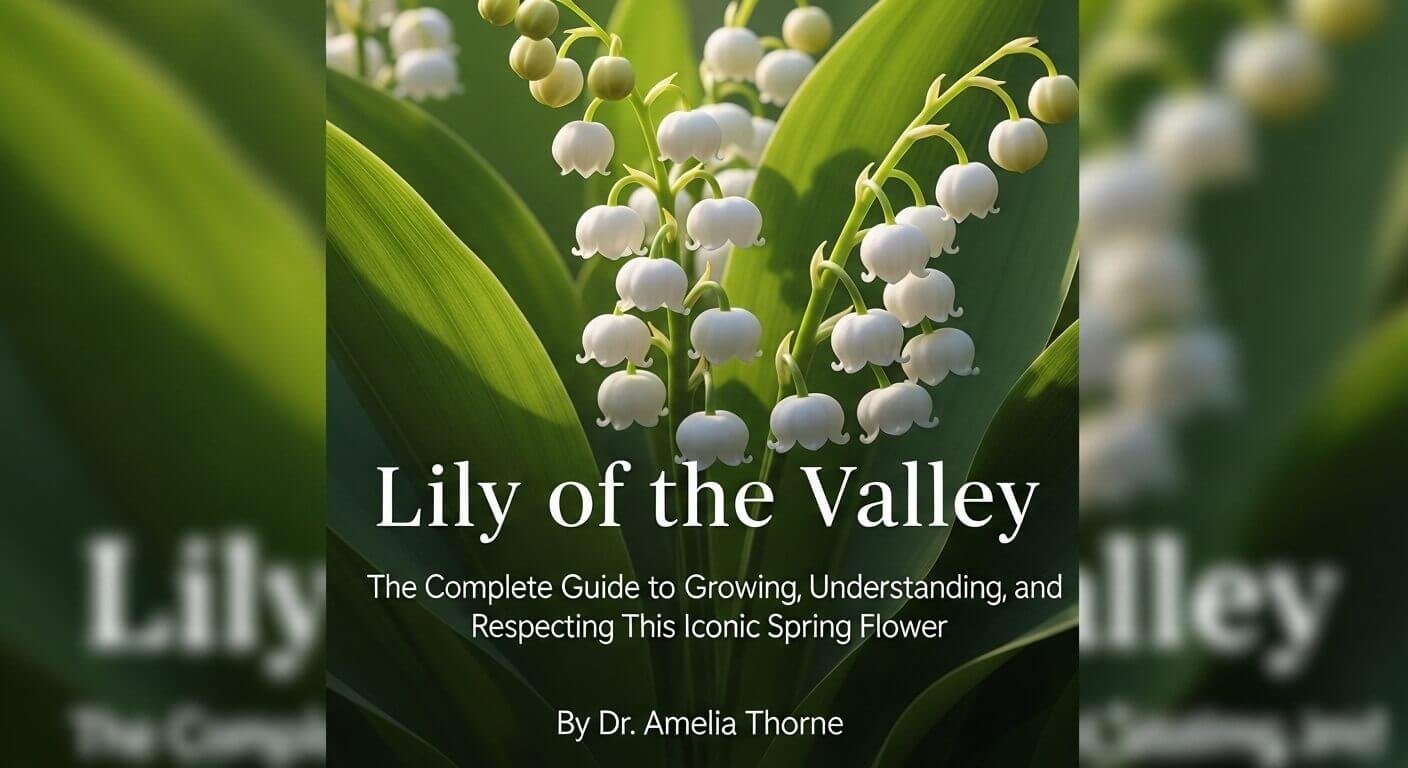
Lily of the valley (Convallaria majalis) is a perennial flowering plant native to the cool temperate regions of the Northern Hemisphere, including Europe, Asia, and parts of North America. Despite its name, it is not a true lily. It belongs to the family Asparagaceae, making it more closely related to asparagus than to an actual lily.
The plant grows low to the ground, typically reaching 15–30cm in height. Its most recognisable features are its paired broad leaves and the arching stem of small, nodding, bell-shaped white flowers that appear in spring, usually between April and June, depending on the climate. The flowers are followed by small red berries in late summer, which are just as toxic as the rest of the plant.
The Name and Its History
The name majalis comes from Latin, meaning “of May” — a reference to its peak blooming season. In French, it is called muguet, and on the 1st of May each year, France observes a centuries-old tradition of giving bunches of lily of the valley as a symbol of good luck and spring’s arrival. The custom dates back to 1561 when King Charles IX received a sprig and was so delighted he began gifting it to the ladies of court annually.
In the language of flowers that became formalised in the Victorian era, lily of the valley symbolises the return of happiness, purity, and humility. It was considered the flower of the Feast of the Annunciation, and in Christian iconography it frequently appears in paintings of the Virgin Mary.
Why It Matters Beyond Aesthetics
Lily of the valley is not merely decorative. It has been used in herbal medicine for centuries, it contains compounds now studied by pharmaceutical researchers, and it is one of the most commercially important fragrance plants in the world. The perfume industry’s relationship with this flower spans well over a century — Dior’s Diorissimo, launched in 1956, remains one of the most celebrated floral fragrances ever created and is built almost entirely around lily of the valley’s scent.
Growing Lily of the Valley: A Practical Step-by-Step Guide
Lily of the valley has a reputation for being easy to grow, and that reputation is largely deserved. It thrives in conditions that frustrate many other plants — shade, slightly acidic soil, cooler temperatures — which makes it a genuinely useful garden plant for difficult spots.
Understanding What It Needs
Before planting, understand what lily of the valley genuinely requires:
- Light: Prefers partial to full shade. Will tolerate dappled morning sun but dislikes harsh afternoon light.
- Soil: Moist, well-draining, rich in organic matter. Slightly acidic to neutral pH (5.5–7.0).
- Climate: Hardy in USDA zones 3–8. Thrives in cool, temperate climates.
- Water: Needs consistent moisture, especially during flowering. Does not tolerate drought well.
- Space: Spreads via underground rhizomes (called pips) and will colonise an area over time.
Step-by-Step Planting Guide
- Choose your location. A north or east-facing border, under a deciduous tree, or along a shaded pathway works well. Avoid south-facing beds with full afternoon sun.
- Prepare the soil. Dig in generous amounts of leaf mould or well-rotted compost before planting. This mimics the woodland floor conditions the plant naturally prefers.
- Plant the pips. Lily of the valley is most commonly planted as bare-root pips (rhizome sections) rather than seeds. Plant pips 5–8cm deep with the pointed tip facing upward, spacing them 10–15cm apart.
- Water thoroughly after planting. Keep the soil consistently moist throughout the first growing season while the plant establishes.
- Mulch the surface. A 5cm layer of leaf mould or bark chips helps retain moisture and mimics the plant’s natural woodland habitat.
- Wait. First-year plants often put their energy into root development rather than flowers. Do not be discouraged by a modest first bloom — the second and third years are usually far more rewarding.
Managing Spread
This is the one area where lily of the valley demands respect as a gardener. It spreads readily and, in ideal conditions, can become invasive. It is listed as an invasive species in several US states, including Michigan, where it has naturalised in woodland areas and outcompetes native plants.
To keep it contained:
- Plant inside buried root barriers or in raised beds with solid edging.
- Divide clumps every 3–4 years to control spread and maintain flowering vigour.
- Be aware that once established in open ground, complete removal is genuinely difficult.
The Toxicity of Lily of the Valley: What Every Grower Must Know
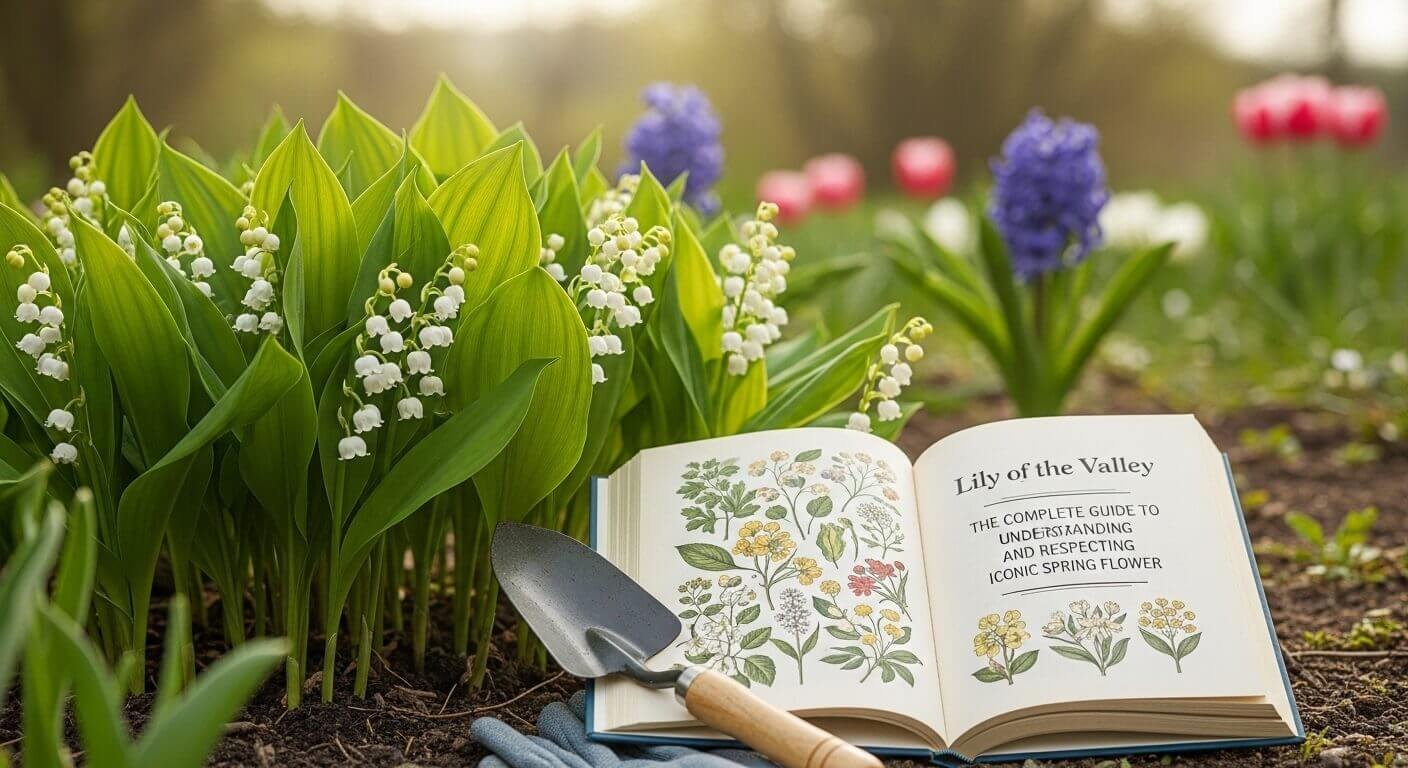
Here is the part that does not always make it into gardening articles, despite being critically important. Every part of lily of the valley is toxic. Not mildly unpleasant — genuinely dangerous.
What Makes It Toxic
The plant contains over 38 cardiac glycosides, including convallatoxin and convalloside. These compounds interfere with the heart’s electrical conduction system, disrupting the sodium-potassium pump that regulates normal heartbeat rhythm.
Symptoms of lily of the valley poisoning include:
- Nausea and vomiting
- Abdominal pain and diarrhoea
- Reduced heart rate (bradycardia)
- Irregular heartbeat (arrhythmia)
- Low blood pressure
- Dizziness and confusion
- In severe cases, cardiac arrest
The red berries that appear in late summer are particularly dangerous because they can attract the attention of children who might mistake them for edible fruit. The water in a vase containing cut lily of the valley flowers has also caused poisoning in children and pets.
Risk to Pets
Lily of the valley is classified as severely toxic to dogs, cats, and horses by veterinary toxicologists. The ASPCA lists it among the most dangerous plants for companion animals. Even small quantities can cause serious cardiac effects in cats and dogs.
If you suspect a pet has consumed any part of the plant, contact a veterinarian immediately. Do not wait for symptoms to appear.
Safe Handling Practices
The plant does not cause skin irritation through touch for most people, but it is wise to:
- Wash your hands after handling the plant, especially before touching your eyes or mouth.
- Keep children away from the berries.
- Never place cut stems in a vase accessible to children or pets.
- Wear gloves when dividing roots if you have sensitive skin.
Lily of the Valley in Medicine and Science
The same cardiac glycosides that make lily of the valley dangerous have also made it scientifically interesting. The relationship between this flower and medicine is long, complicated, and genuinely fascinating.
Traditional Medicinal Use
For centuries before modern pharmacology, lily of the valley was used in European herbal medicine. Physicians employed it to treat heart failure, dropsy (fluid retention associated with heart disease), and arrhythmias — conditions we now understand were directly caused by the very cardiac glycosides in the plant.
The 16th-century herbalist John Gerard described using it to strengthen memory and restore a “merry heart.” Later practitioners used it specifically for cardiac complaints, and their intuition was not entirely wrong — they were dosing patients with natural cardiac glycosides, just without the ability to control dose or purity.
Modern Pharmaceutical Research
Convallatoxin, one of the primary glycosides in lily of the valley, has been studied for potential applications in cancer research. Some laboratory studies have found it inhibits the growth of certain cancer cell lines, though this research is still in early stages and far from clinical application.
The broader family of cardiac glycosides — including digoxin, derived from foxglove — remains in active medical use for treating heart failure and atrial fibrillation. Lily of the valley glycosides are chemically similar, which is exactly why the plant is dangerous but also why it has attracted sustained scientific attention.
Fragrance Chemistry
The scent of lily of the valley is produced by a compound called bourgeonal, along with several other volatile molecules. Interestingly, bourgeonal cannot be economically extracted from the plant itself in sufficient quantities for commercial perfumery — the yield is too low. Almost all lily of the valley fragrance in commercial products is synthetic, recreated in a laboratory to mimic the natural scent profile.
This fact surprises most people. The most recognisable floral fragrance in the perfume industry is, in practice, almost entirely man-made.
Lily of the Valley in Culture, Symbolism, and Modern Use
Few plants carry as much cultural weight across as many different traditions as the lily of the valley. Its influence extends from medieval Christianity to contemporary royal weddings, from Finnish national identity to French May Day celebrations.
Royal Wedding Flowers
The plant’s association with royal weddings runs deeper than its visual appeal. Queen Victoria’s wedding in 1840 featured lily of the valley prominently. Princess Grace Kelly carried it at her 1956 Monaco wedding. Kate Middleton’s 2011 bouquet included lily of the valley alongside Sweet William and hyacinth.
The repeated royal endorsement reflects something genuine about the flower: its scent is intimate, its scale is modest rather than showy, and its whiteness reads as purity without ostentation. For ceremonies that require symbolism without extravagance, it repeatedly proves itself the right choice.
National Flower of Finland
Lily of the valley is the national flower of Finland, officially adopted in 1967. Its significance there reflects a broader Nordic affection for woodland plants that bloom briefly and brilliantly after long winters — a quality that resonates culturally in a country where spring’s arrival matters enormously.
The May Day Tradition in France
In France, giving a small bunch of lily of the valley (muguet) on the 1st of May is a tradition observed across all levels of society. Street vendors sell bunches throughout the country in the days leading up to May Day. The practice is so embedded in French culture that even the largest luxury perfume houses release limited-edition lily of the valley fragrances for the occasion each year.
Lily of the Valley vs. Similar Flowers: How to Tell Them Apart
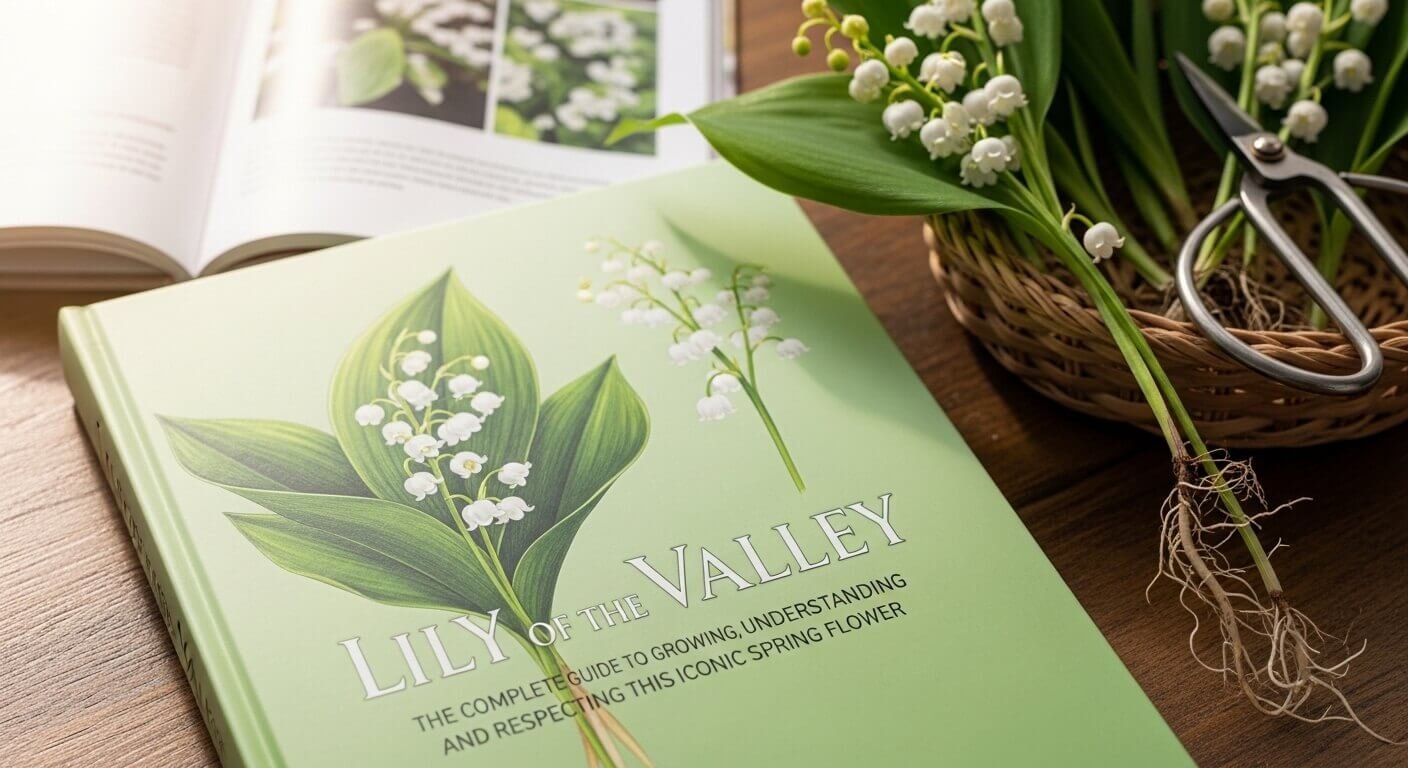
Several plants are commonly confused with lily of the valley, and given the toxicity involved, knowing the differences matters.
Lily of the Valley vs. Wild Garlic (Allium ursinum)
Wild garlic shares the same woodland habitat and similarly broad, pointed leaves. The critical difference is smell — crush a wild garlic leaf and the scent is unmistakably garlicky. Lily of the valley has no such smell when the leaf is bruised, only when the flower is present.
This distinction matters because wild garlic leaves are edible and widely foraged, while lily of the valley leaves are toxic. Foragers must be certain of identification before consuming anything from the woodland floor.
Lily of the Valley vs. False Lily of the Valley (Maianthemum bifolium)
False lily of the valley is a native woodland plant in Europe and Asia that resembles lily of the valley but produces tiny star-shaped white flowers rather than bells, and its berries turn red-speckled rather than uniformly red. It is mildly toxic but far less dangerous than true lily of the valley.
Lily of the Valley vs. Snowdrops
Snowdrops (Galanthus) are a common point of confusion for casual observers, though a closer look reveals clear differences. Snowdrops flower earlier (January to March), produce a single drooping flower per stem rather than a row of bells, and have narrow grass-like leaves rather than broad oval ones. Both are toxic, but snowdrop toxicity is generally considered less severe.
Pros and Cons of Growing Lily of the Valley
Pros
- Thrives in deep shade where many other plants struggle
- Spreads to fill difficult areas under trees or along north-facing borders
- Exceptionally fragrant — one of the most distinctive scents in the spring garden
- Largely pest and disease-resistant
- Low maintenance once established
- Stunning in cut arrangements and long-lasting in water
Cons
- Highly toxic to humans, dogs, cats, and horses
- Can spread aggressively and become difficult to remove
- Listed as invasive in some US states
- Short flowering window (typically 2–3 weeks)
- Does not perform well in hot, dry climates
- Commercially available fragrance is synthetic, not extracted from the plant
The Honest Verdict on Lily of the Valley
Lily of the valley rewards the gardener who goes in with clear eyes. It is genuinely beautiful, genuinely fragrant, and genuinely one of the most useful plants available for shaded, difficult spots. It is also genuinely toxic and genuinely capable of spreading beyond where you intended.
The people who struggle with it are those who plant it without fully understanding either quality. The people who love it — and there are many, across many centuries — are those who give it the right conditions and respect its limits.
If you have children or pets who access your garden freely, the calculus is straightforward: choose a different plant, or contain lily of the valley behind a barrier they cannot reach. The risk is not theoretical.
If you are planting in a controlled space — a walled courtyard, a formal shaded border with solid edging, a container — lily of the valley offers rewards that few other shade plants match. The fragrance alone in early May justifies the effort for many gardeners. That the same flower has graced royal bouquets, inspired some of the most beloved perfumes ever created, and been given as a symbol of happiness across an entire nation for over four centuries is not incidental. It has earned every bit of that reputation.
Grow it thoughtfully, understand it honestly, and lily of the valley will be one of the most memorable plants in your garden.