Introduction
Every great fairy tale has a villain lurking in the margins — someone whose cruelty gives the hero a reason to rise. Disney’s Frozen gave audiences Hans and his cold-blooded betrayal, but for thousands of fans, that wasn’t enough. They wanted something older, something darker, something woven into the very foundation of Elsa and Anna’s tragedy. That’s how Malhissa was born: a sorceress, a blood relative, and a monster hiding behind royal lineage. She didn’t just threaten Arendelle — according to the fan stories that created her, she destroyed it from the inside.
Malhissa is one of the most discussed original villain concepts in the Frozen fan fiction community. She’s not a Disney-sanctioned character, and she never appeared in any official film or Disney+ production. She exists entirely within fan-created lore — spawned from wikis, DeviantArt threads, and Fandom blogs — yet her presence in fan discussions has been persistent enough to warrant a serious look at who she is, what she represents, and why the Frozen fandom keeps returning to characters like her.
Who Is Malhissa? Understanding the Fan-Created Villain of Frozen
At her core, Malhissa is conceived as the evil aunt of both Elsa and Anna. In the most widely circulated fan interpretations, she is a powerful sorceress whose abilities rival — or surpass — Elsa’s ice magic. While Elsa commands snow and frost, Malhissa’s powers are framed as storm-based and destructive: raw elemental force wielded without restraint or mercy.
Her origin story, as pieced together across several fan wiki entries, places her as a member of Arendelle’s royal family who harbors a deep-seated obsession with claiming the throne. She isn’t motivated by ideology or wounded love like Hans. She simply wants power — and she’s willing to dismantle everything her nieces hold dear to get it.
Her Role in the Story
According to the most detailed fan accounts, Malhissa appears in the background of the sisters’ childhood, watching the royal family from a distance and scheming. Her first major act of violence involves using storm magic to engineer the shipwreck that kills Anna and Elsa’s parents — the tragedy that haunts both films. In the official Frozen, that storm is an act of nature. In Malhissa’s story, it’s murder.
This reframing is significant. It transforms the parents’ death from a plot device into a crime with a perpetrator, giving the emotional wound at the center of Frozen a face and a motive. Fans who find the original film’s backstory vague or unsatisfying respond to this kind of revision viscerally.
Her Powers and Abilities
Fan writers have given Malhissa a flexible, terrifying power set that typically includes:
- Storm manipulation and weather control
- Transformation magic (turning beings into animals)
- Offensive energy attacks are used against other characters
- Shapeshifting into multiple monstrous forms, including bird, bat, snake, and cougar variants
- The ability to lock, seal, and trap using enchanted keys and barriers
This shapeshifting ability draws an obvious parallel to Maleficent from Sleeping Beauty, and that connection is deliberate. Many fans explicitly cast Malhissa as a Maleficent-type figure — a dark, powerful matriarch whose evil is theatrical and ancient rather than politically motivated.
The Fan Fiction Ecosystem That Gave Malhissa Life
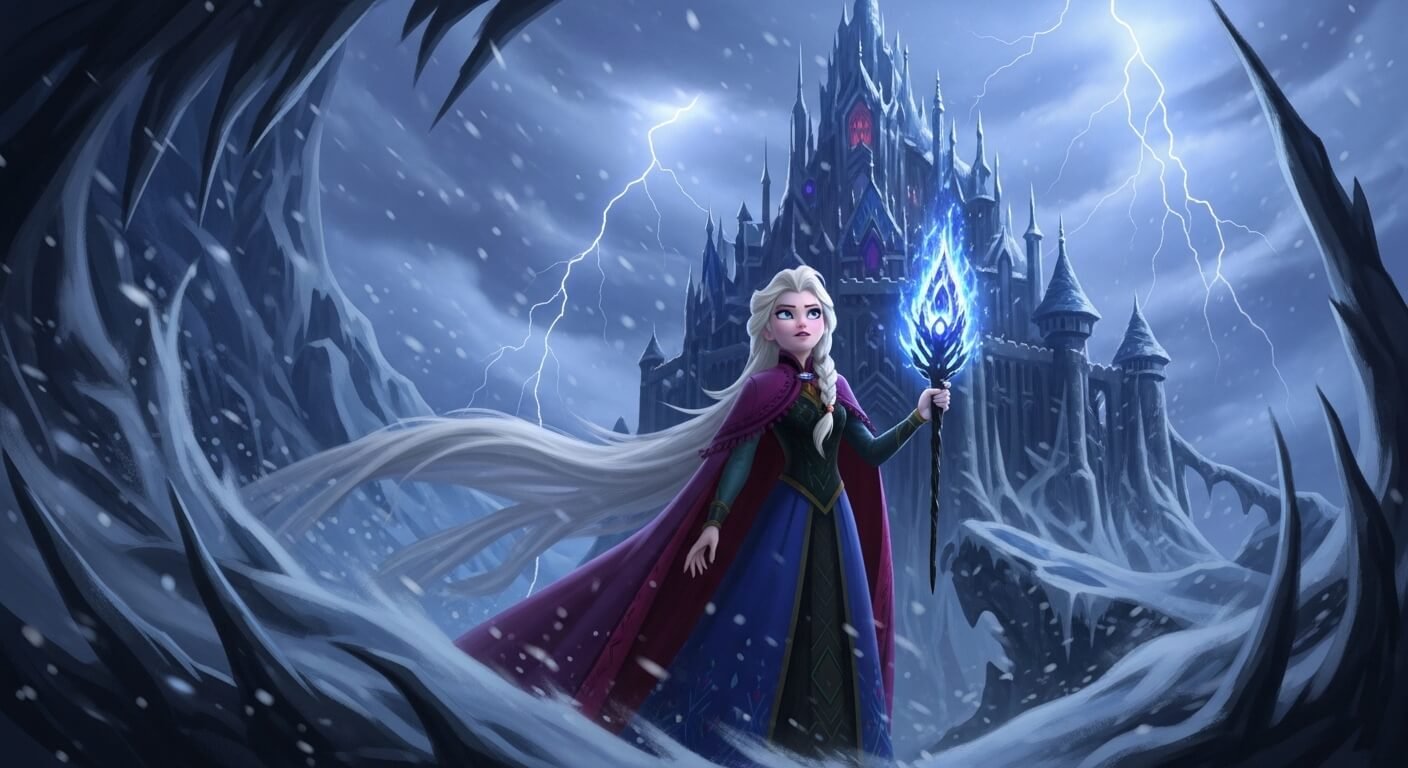
Malhissa didn’t emerge from a single story. She developed across a network of Fandom wikis, DeviantArt concept pages, parody casting wikis, and long-form blog posts on the official Disney Wiki’s user blog section. This kind of distributed character creation is common in large fandoms, but the Frozen fandom is particularly fertile ground for it.
Frozen was released in 2013 and became one of the highest-grossing animated films ever made. Its emotional core — two sisters, one with terrifying powers, the other desperate to reconnect — was rich enough to inspire enormous amounts of creative output. But it also left gaps. The parents’ death felt abrupt. Elsa’s isolation seemed to lack a true external catalyst. Hans’s betrayal, while effective, arrived late and had no personal history with the sisters.
Malhissa fills all of those gaps at once.
Why This Villain Concept Resonates
The best fan villains work because they solve narrative problems. Malhissa does several things simultaneously:
- She provides a reason for the parents’ death beyond bad luck
- She creates a specific antagonist who has personally wronged Anna and Elsa over years, not hours
- She gives Elsa’s fear of her powers an external source — Malhissa‘s presence and abuse during childhood
- She escalates the stakes of Elsa’s coronation arc by adding someone with actual magical power and a personal vendetta
Fan fiction readers and writers respond to this because it makes the world feel more coherent. Tragedy is more compelling when it has an author.
Malhissa as an Original Character: Creative Design and Fan Reception
In fan communities, original characters (OCs) are a divisive topic. A well-constructed OC can deepen a story world in ways the original creators never explored. A poorly constructed one can feel like wish fulfillment or a disruption of established character dynamics.
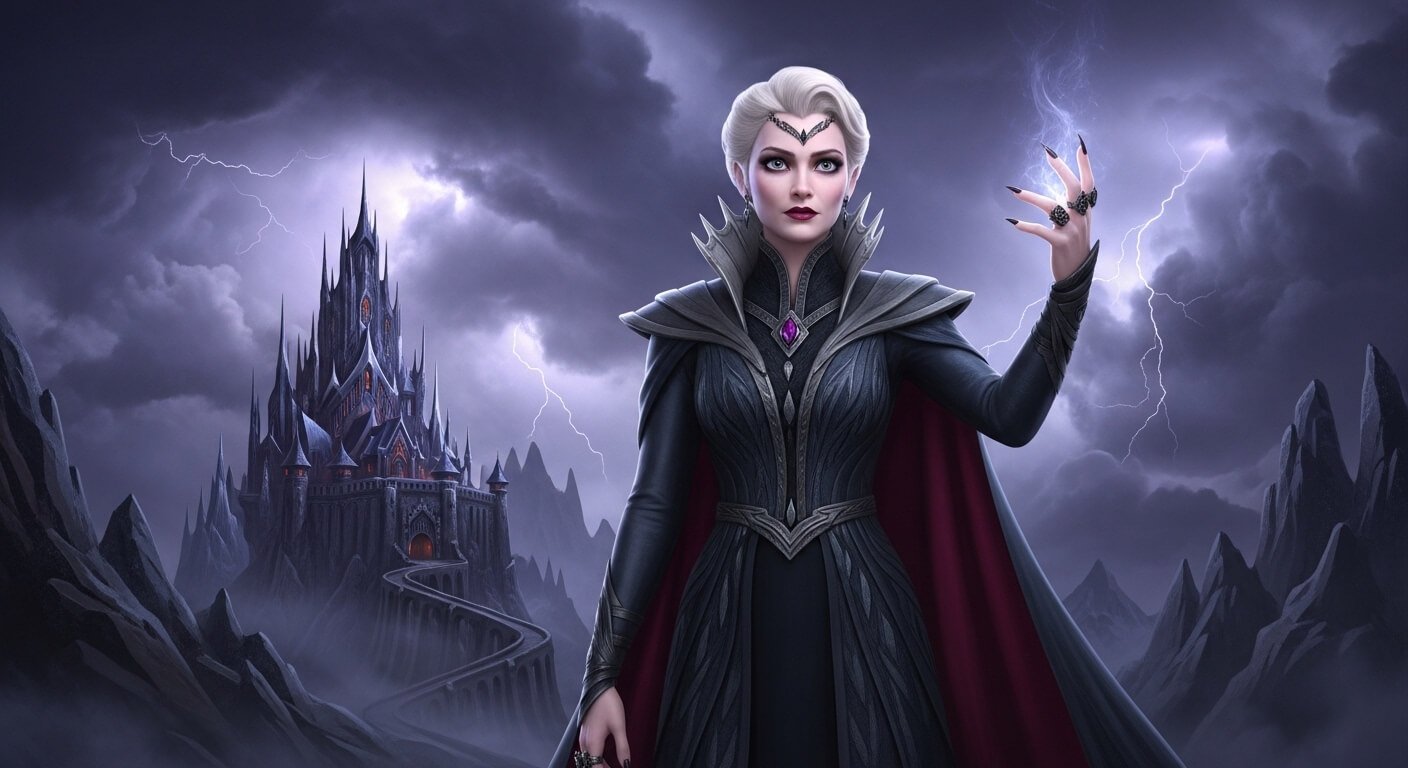
Malhissa, in most of her fan interpretations, leans toward the former. Her design concept — as seen in DeviantArt illustrations and Fandom concept art descriptions — typically depicts her as tall, angular, and draped in dark colors. Some artists reference her as “Malhissa the Sorceress,” giving her a title that reinforces her magical identity over any political one.
How Fan Artists Have Visualized Her
Artists in the Frozen fan community have produced concept sketches that position Malhissa as the dark counterpart to Elsa. Where Elsa is blonde, icy, and restrained, Malhissa tends to be drawn in deep purples, blacks, and storm grays — visually echoing both Maleficent’s aesthetic and the stormy magic she supposedly commands. The name itself — a portmanteau-style fusion of “Maleficent” and “Melissa” or similar sounds — signals her lineage in the Disney villain tradition.
The Parody Wiki Phenomenon
One of the most unexpected corners of Malhissa’s online presence is the Parody Wiki on Fandom, where fans create elaborate crossover casting lists. In these entries, Malhissa is assigned to different animated characters from other franchises — Belladonna from All Dogs Go to Heaven, Fenghuang from Kung Fu Panda: Legends of Awesomeness, and others. This kind of casting exercise, strange as it sounds, is a genuine measure of how established a fan character has become. Characters only get cast in parody wikis when the community has collectively agreed on what they are.
Comparing Malhissa to Official Frozen Villains
It’s worth being direct about where Malhissa sits relative to the villains Disney actually put on screen.
Hans vs. Malhissa
Hans is the official antagonist of the original Frozen, and his effectiveness comes from misdirection. He appears to be the answer to Anna’s loneliness and need for love, then reveals himself as a calculating opportunist. His villainy is intimate and personal — a betrayal of trust rather than a magical assault.
Malhissa operates on a completely different register. She’s not deceptive in the same slow-burn way. She’s a sorceress with open malice, someone who has been working against the royal family for years. In dramatic terms, Hans is a thriller villain; Malhissa is a classic fairy tale villain. Both types serve different narrative purposes.
The Nokk and Other Frozen 2 Elements
Frozen 2 introduced more mythological elements — the Enchanted Forest, the Ahtohallan river, and elemental spirits. This expansion of the magical world makes a character like Malhissa feel less out of place than she might have in the context of the first film alone. A dark sorceress who manipulates storms fits comfortably into Frozen 2‘s expanded mythology, which is part of why fan speculation about a potential Frozen 3 villain so frequently circles back to figures like her.
Malhissa in the Context of Frozen 3 Speculation
Frozen 3 has been officially announced by Disney, with both Idina Menzel and Kristen Bell confirmed to return. Fan speculation about the film’s villain has been running hot since the announcement.
Malhissa, or character concepts strongly resembling her, appear regularly in these discussions. The appeal is straightforward: Frozen 3 needs a villain who operates on a magical level comparable to Elsa, has a personal connection to the royal family, and can anchor a story that goes deeper into Arendelle’s hidden history. An evil relative who has been pulling strings since before the sisters were born checks every one of those boxes.
What a Canon Version Would Need
If Disney were ever to adapt a character in this vein, the concept would need some refinement:
- A clearer motivation beyond raw ambition — great Disney villains have wounds as much as goals
- A visual design distinct enough from Maleficent to stand on its own
- A power set that creates specific problems for Elsa, not just generic danger
- A personal history with the sisters that the audience can feel rather than just be told about
None of these is insurmountable. The bones of the concept are genuinely strong.
Red Flags and Limitations of the Malhissa Concept
No character concept is without its problems, and fair analysis requires acknowledging them.
The most frequently cited issue in fan discussions is the way Malhissa can risk making the Frozen universe feel overpopulated with magical threats. One of the original film’s strengths was its restraint — the world felt grounded despite Elsa’s powers. Adding a second, more powerful sorceress with a secret vendetta can tip that balance toward high fantasy in ways that dilute the emotional intimacy the franchise runs on.
There’s also the question of originality. Malhissa’s design, name construction, and power set pull heavily from Maleficent — so heavily that some fans critique her as derivative rather than genuinely inventive. The best fan OCs find ways to be distinct from their obvious influences. Malhissa, in many of her iterations, hasn’t fully achieved that.
Finally, as a fan-created character with no canonical backing, her characterization varies enormously depending on which blog post, wiki entry, or fan story you’re reading. There’s no definitive Malhissa, which means she can mean very different things to different corners of the fan community.
The Broader Meaning of Characters Like Malhissa
The existence of Malhissa says something interesting about what audiences want from the Frozen franchise that they aren’t fully getting from official content. They want a villain with magical weight. They want a personal history of evil that explains the sisters’ suffering rather than leaving it to circumstance. They want someone whose defeat would feel like genuine catharsis, not just a plot resolution.
Disney has built one of the most commercially successful animated franchises in history with Frozen. But commercial success and narrative satisfaction are not always the same thing. Malhissa, and the community of fans who created and developed her, represents a grassroots attempt to fill the gap between the two.
Fan fiction is often dismissed as derivative or unserious. Characters like Malhissa deserve more credit than that. They are, in their own way, acts of collaborative storytelling — attempts by audiences to engage with stories they love deeply enough to want to improve. Whether Malhissa ever makes it to an official Disney screen doesn’t change the fact that she already lives, vividly, in the imagination of the community that made her.
The Frozen universe has always been about the power of love to thaw what fear has frozen. Malhissa, the aunt who chose power over family, is the shadow side of that theme made flesh. She exists because some stories demand a villain worthy of their heroes — and the fans of Arendelle decided not to wait for one.