Introduction
Picture yourself walking through a quiet Japanese street at dusk. The air feels heavy, and you sense something watching you from the shadows. In Japanese folklore, that presence might be a shinigami, a death spirit waiting to guide souls from this world to the next.
These mysterious beings have captivated imaginations for centuries, evolving from obscure folklore figures into global cultural icons through manga and anime. But what exactly are shinigami? Where did they come from? And why do millions of people around the world now recognize these Japanese death gods?
This comprehensive guide explores everything you need to know about shinigami, from their historical origins to their role in modern entertainment.
What Are Shinigami?
Shinigami are supernatural beings from Japanese mythology who guide human souls from life to death. The word itself combines two Japanese terms: “shi” meaning death, and “kami,” referring to gods or spirits.
Unlike the Western Grim Reaper, who actively harvests souls, shinigami serve more as psychopomps, spiritual escorts who ensure people die at their appointed time and reach the afterlife safely. They don’t typically cause death but rather facilitate the natural transition that must occur.
Japanese culture views death as part of an eternal cycle rather than a singular ending. The shinigami embody this philosophy, acting as mediators between the mortal realm and whatever comes next.
How Shinigami Differ From the Grim Reaper
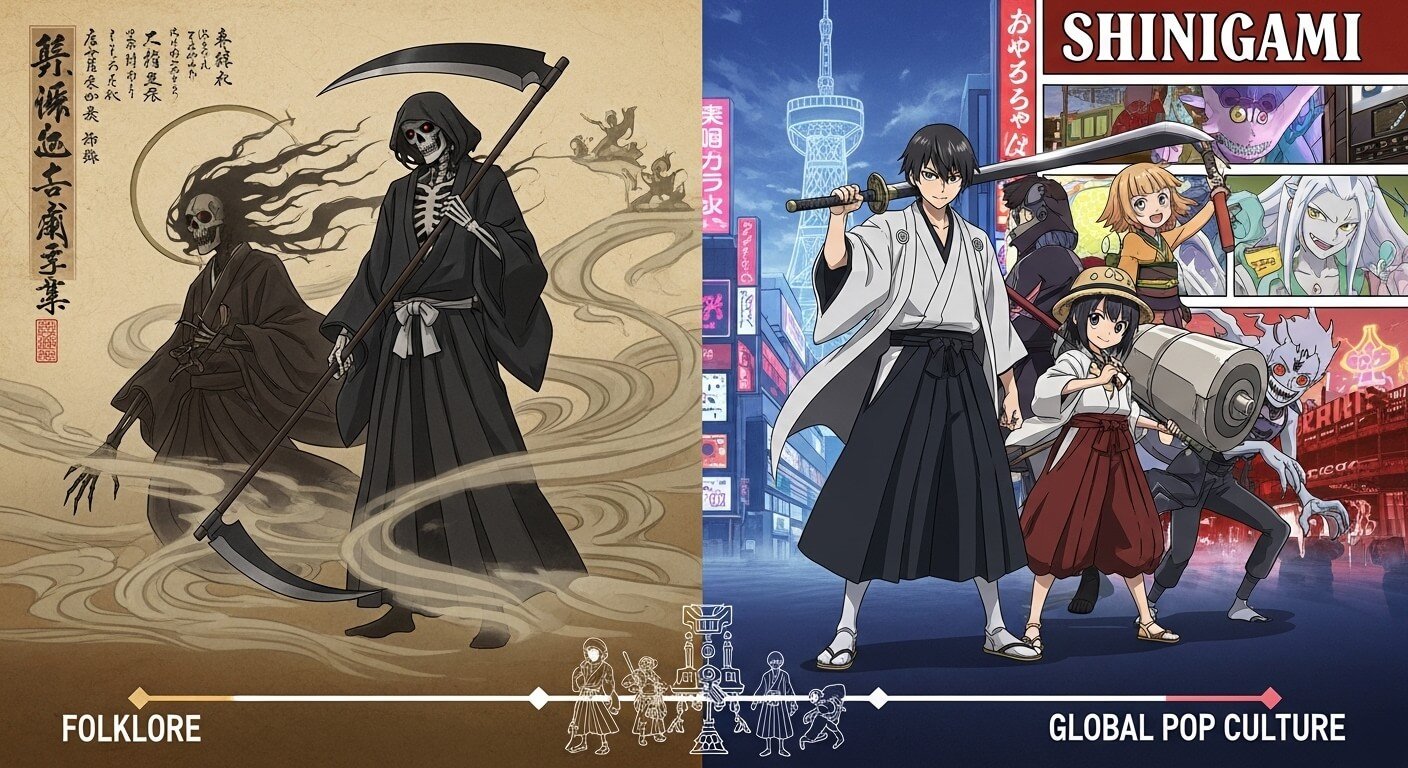
Western culture personifies Death as a single, terrifying figure cloaked in black and wielding a scythe. The Grim Reaper actively seeks out souls to claim, often appearing as an ominous threat.
Shinigami operate differently in several key ways:
Multiple beings exist: Rather than one Death figure, Japanese folklore suggests many shinigami work simultaneously, sometimes in pairs.
They invite rather than take: Shinigami politely guide people toward death instead of forcefully dragging souls away.
No standard appearance: While the Grim Reaper always appears as a skeletal figure with specific clothing, shinigami can look like anything or remain invisible until death approaches.
They maintain order: Their primary function is ensuring cosmic balance by preventing souls from lingering inappropriately in the living world.
These differences reflect fundamental cultural distinctions in how Eastern and Western societies conceptualize mortality.
The Surprising History of Shinigami
Here’s something that surprises most people: shinigami are actually quite new to Japanese mythology. They didn’t exist in classical Japanese folklore and only appeared during the Edo period in the 18th or 19th century.
Pre-Shinigami Death Deities
Before shinigami emerged, Japanese religious traditions already featured various death-related beings:
Izanami: The Shinto goddess of creation who became associated with death after dying while giving birth to the fire god Kagutsuchi. She rules Yomi, the shadowy underworld, and many scholars consider her the first Japanese death deity.
Mrtyu-mara: A Buddhist demon who drives people toward death and suicide. Those possessed by this entity supposedly experience sudden, overwhelming urges to end their lives.
Yama: The Buddhist king of the underworld who judges the dead and determines their next reincarnation based on karmic evaluation.
These beings influenced how shinigami would eventually be conceptualized.
The Birth of Modern Shinigami
Shinigami, as we understand them today, emerged when Eastern and Western cultures began mixing during the Edo period (1603-1868). Japanese society encountered Christian concepts, including the Western Grim Reaper, and these ideas blended with existing Buddhist, Shinto, and Taoist beliefs.
The word “shinigami” first appeared in literature around 1706 in Chikamatsu Monzaemon’s puppet theater play “The Love Suicides at Amijima.” The play referenced spirits that lead people toward death, particularly in contexts of double suicide.
By 1841, the book “Ehon Hyaku Monogatari” (Picture Book of a Hundred Stories) included a story specifically titled “Shinigami,” featuring a ghost that torments the living by planting suicidal thoughts.
These early appearances established shinigami as spirits connected to death, possession, and the tragic endings of human lives.
Regional Folklore and Beliefs
Japanese regions developed their own specific shinigami traditions, adding layers of complexity to these death spirits.
Hamamatsu Area Legends
In Shizuoka Prefecture’s Hamamatsu area, locals believed shinigami possessed people and led them to places where others had died, such as mountains, seas, and railroad tracks.
According to these tales, the dead maintained a “death turn” (shiniban). Until someone new died in that location, previous victims couldn’t ascend to the afterlife regardless of the religious services performed. The deceased would invite living people to join them, breaking this cycle.
Okayama Prefecture Grave Visitation
Okayama folklore contained specific rules about visiting graves during Higan, the Buddhist week of equinox celebrations. Normally, people visit graves at noon or sunset, but visiting during sunrise without prior planning would result in shinigami possession.
However, once someone visited a grave at sunset, they needed to return during sunrise to avoid possession. This created a perpetual cycle of necessary visitations.
These regional variations show how shinigami beliefs adapted to local customs and concerns.
Famous Shinigami Stories and Tales
Several traditional stories illustrate how shinigami functioned in Japanese folklore.
The Doctor and the Shinigami
One popular tale involves a man contemplating suicide due to life’s hardships. Before he acts, a shinigami appears and tells him his time hasn’t arrived yet.
The shinigami offers him a gift: to pretend to be a doctor who can cure any disease. The spirit teaches him magic words that force shinigami back to the underworld, extending a patient’s life.
There’s a catch. If the shinigami sits at the foot of a sick person’s bed, the magic works. If the shinigami sits at the head of the bed, death is certain and cannot be prevented.
The man becomes wealthy using this knowledge. One day, he’s called to treat someone with the shinigami positioned at the head of the bed. The desperate family offers an enormous payment. Consumed by greed, the man waits until the shinigami dozes off, then rotates the bed to save the patient.
The shinigami awakens, furious at being tricked. It takes the man to a building filled with candles representing human lifespans. The doctor’s candle has nearly burned out due to his greed.
The shinigami offers him one final chance: transfer his wick and wax to another person’s candle. The man attempts this but drops his candle during the transfer, extinguishing it completely. He dies instantly.
This story teaches about greed, respecting natural order, and the consequences of trying to cheat death.
Possession and Double Suicides
Several Edo-period stories describe shinigami possessing people and driving them to ruin or death. A 1850 essay titled “Shōzan Chomon Kishū” tells of a prostitute possessed by a shinigami who convinces a man to commit double suicide with her.
An 1886 kabuki play by Kawatake Mokuami featured shinigami entering people’s thoughts, making them dwell on bad deeds and desire death as punishment.
These narratives often blurred whether shinigami actually existed or simply represented the psychological darkness that drives people toward self-destruction.
Shinigami Characteristics and Appearance
Since shinigami only emerged a few centuries ago, no standardized depiction exists. Different stories and artistic interpretations present wildly varying appearances.
Common Visual Elements
Despite inconsistency, certain characteristics appear frequently:
- Black kimonos or dark clothing
- Long white or pale hair
- Skeletal or gaunt features
- Ability to become invisible
- Childlike or elderly appearances
- Humanoid form (when visible)
Some artwork portrays them as small, almost cute beings. Others depict them as terrifying skeletal creatures. This flexibility allows modern creators to reimagine shinigami in countless ways.
Powers and Abilities
Traditional folklore attributes several abilities to shinigami:
Life detection: They can see how much life remains in a person, sometimes visualized as burning candles.
Possession: Shinigami can enter human minds and influence thoughts, particularly toward death or suicide.
Invisibility: Most people cannot see shinigami unless death approaches or the spirit chooses to reveal itself.
Soul guidance: Their primary function involves escorting deceased souls to appropriate afterlife realms.
Cosmic enforcement: They maintain order by ensuring people die at predetermined times and souls don’t linger in the living world.
These abilities make shinigami both guardians of cosmic order and potentially dangerous beings when they interact directly with humans.
Shinigami in Modern Pop Culture
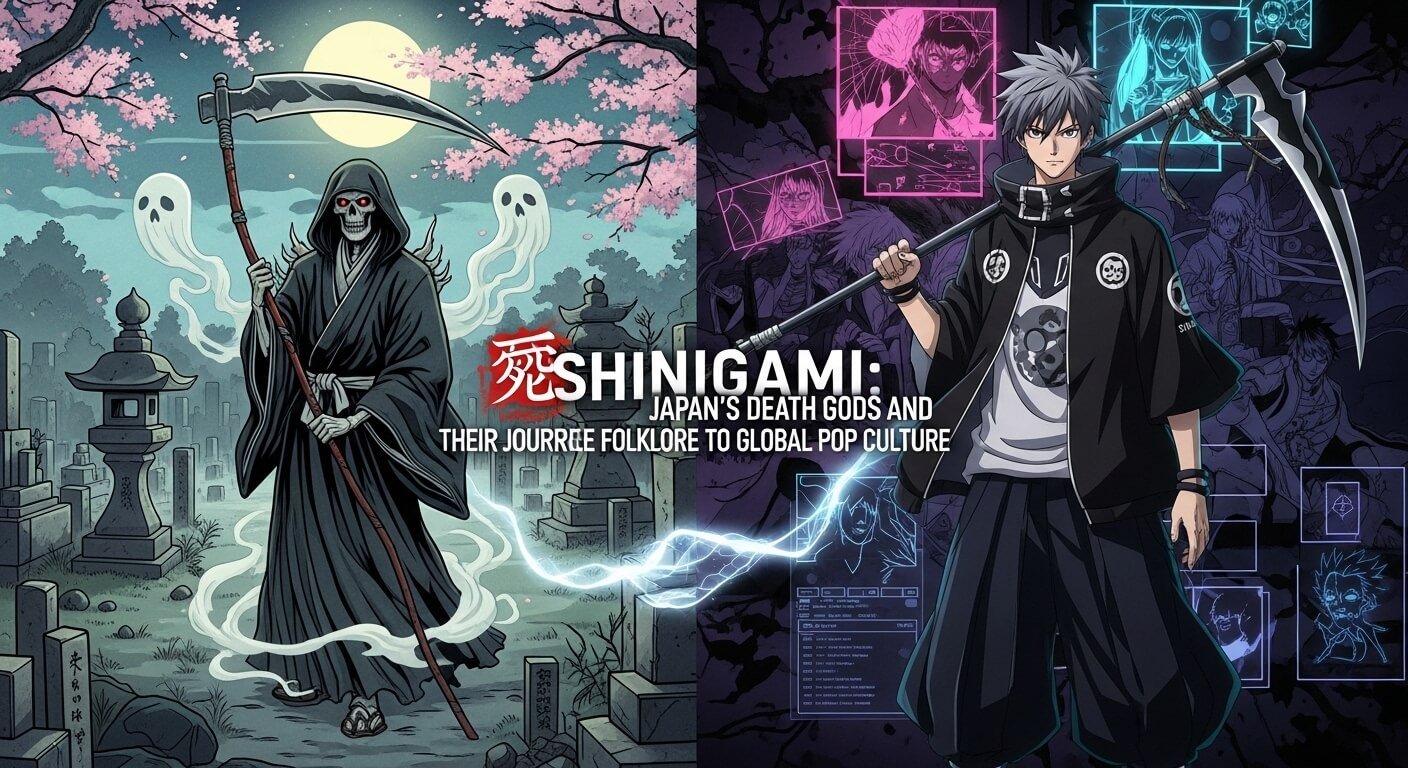
The late 20th century saw shinigami explode into mainstream entertainment. Japanese manga and anime transformed these obscure folklore figures into globally recognized characters.
Death Note: The Apple-Loving Shinigami
Perhaps the most famous modern shinigami is Ryuk from the manga and anime series “Death Note” by Tsugumi Oba. Ryuk is a death god who drops his Death Note notebook into the human world out of boredom.
High school student Light Yagami finds the notebook and discovers that anyone whose name he writes in it dies. Ryuk becomes Light’s companion, watching as the teenager attempts to create his vision of a perfect world by eliminating criminals.
Ryuk loves apples and provides comic relief despite his connection to mass death. He represents a modern, almost friendly interpretation of shinigami that differs dramatically from traditional folklore.
The series sold over 30 million copies in Japan alone and spawned an international phenomenon, including anime, films, and a Netflix adaptation.
Bleach: Shinigami as Soul Society Protectors
Tite Kubo’s “Bleach” manga features an entire society of shinigami who protect humans from evil spirits while guiding good souls to the afterlife. They wear traditional black kimonos and wield zanpakutō (soul-cutting swords).
In this universe, shinigami are essentially samurai-style soul warriors living in a parallel dimension called Soul Society. They battle Hollows (corrupted spirits) and maintain balance between the living world and spiritual realms.
This interpretation transformed shinigami from passive guides into active heroes, creating a complete mythology that captivated millions of readers worldwide.
Soul Eater: Death Academy
“Soul Eater” by Atsushi Ōkubo features Death himself (called Shinigami-sama) as a comical character who founded the Death Weapon Meister Academy. He trains students to battle evil and prevent the emergence of another “Great Devourer” like Asura.
This version presents shinigami as an organized force for good rather than neutral guides or ominous threats. The playful art style and humor further distance this interpretation from traditional folklore.
Other Notable Appearances
Shinigami appear across Japanese entertainment:
- “Naruto” features a Shinigami summoned through the Reaper Death Seal jutsu
- “Yu Yu Hakusho” includes spirit world authorities who manage death
- “Jujutsu Kaisen” incorporates death-related curses and spiritual entities
- “Noragami” centers on forgotten gods, including delivery god Yato
These appearances range from faithful folklore interpretations to completely original reimaginings.
The Philosophy Behind Shinigami
Understanding shinigami requires grasping Japanese philosophical views on death and existence.
Death as a Natural Cycle
Unlike Western traditions that often treat death as an ending or punishment, Japanese Buddhism and Shinto view death as a transformation. Life flows into death, which flows into rebirth in an eternal cycle.
Shinigami embody this perspective. They don’t punish or reward. They simply ensure the natural process unfolds correctly at the appointed time.
The Concept of Kegare
Traditional Japanese culture associated death with kegare (impurity). This isn’t moral corruption but rather a state of spiritual imbalance requiring purification rituals.
Shinigami exist at the intersection of life and death, managing the impure transition and maintaining cosmic cleanliness. Their role prevents spiritual contamination from spreading.
Karma and Judgment
Buddhist influences added karmic judgment to shinigami lore. They escort souls to be evaluated based on actions during life, determining the next incarnation.
This transforms shinigami from simple guides into cosmic bureaucrats maintaining universal justice through reincarnation cycles.
Why Shinigami Resonate Globally
Despite their Japanese origins, shinigami have achieved worldwide recognition. Several factors explain this appeal.
Universal Fear of Death
Every culture grapples with mortality. Shinigami provides a framework for understanding death that feels less threatening than Western alternatives. They invite rather than force, guide rather than judge.
Compelling Storytelling Potential
The flexibility of shinigami concepts allows endless creative interpretations. They can be villains, heroes, comic relief, or tragic figures, depending on story’s needs.
This versatility makes them perfect for modern narratives exploring morality, justice, and the meaning of life.
Aesthetic Appeal
Japanese manga and anime art styles present shinigami in visually striking ways. From Ryuk’s monstrous appearance to Bleach’s sleek soul reapers, these designs capture imagination and inspire fan art, cosplay, and merchandise.
Philosophical Depth
Stories featuring shinigami often explore profound questions: What is justice? When is death deserved? How should we live knowing we’re mortal?
These themes resonate across cultures, making shinigami stories feel personally meaningful rather than just entertaining.
The Cultural Impact of Shinigami
Shinigami’s journey from obscure folklore to global phenomenon reflects broader trends in cultural exchange and media influence.
Spreading Japanese Culture
Shinigami introduced millions of Westerners to Japanese mythology, religion, and philosophy. Fans researching their favorite manga characters discovered Buddhism, Shinto, and traditional folklore.
This cultural education happens organically through entertainment rather than formal study.
Inspiring Creative Works
Artists, writers, and creators worldwide have developed shinigami-inspired original works. The concept has escaped its Japanese origins to become a versatile storytelling tool.
Western novels, comics, and films now feature shinigami-like characters, adapted to different cultural contexts while maintaining core concepts.
Cosplay and Fan Communities
Shinigami characters dominate anime conventions worldwide. Fans spend countless hours creating detailed costumes, discussing character motivations, and sharing fan theories.
These communities keep shinigami relevant and introduce new generations to both modern interpretations and traditional folklore.
Common Misconceptions About Shinigami
Popular culture has created several misunderstandings about these death spirits.
Misconception 1: They’re Evil
Traditional folklore doesn’t portray shinigami as inherently evil. They’re neutral forces maintaining cosmic order. While they can possess people or lead them to death, this reflects their nature rather than malicious intent.
Modern manga sometimes depicts evil shinigami, but these are creative liberties rather than faithful folklore representations.
Misconception 2: There’s Only One
Unlike the singular Grim Reaper, Japanese tradition suggests multiple shinigami exist simultaneously. They work as a collective system rather than one all-powerful being.
Misconception 3: They’re Ancient
Many assume shinigami are as old as Japanese culture itself. In reality, they only emerged 200-300 years ago through cultural mixing and adaptation.
Misconception 4: They Kill People
Shinigami don’t actively kill. They guide souls at the predetermined time of death. Traditional stories emphasize that they ensure deaths happen correctly rather than causing deaths themselves.
The Future of Shinigami
As Japanese pop culture continues expanding globally, shinigami will likely evolve further.
New Interpretations
Each generation of creators reimagines shinigami for contemporary audiences. Future depictions may blend traditional elements with modern concerns about technology, climate change, or social justice.
Cross-Cultural Adaptations
Western creators increasingly incorporate shinigami into their works. These adaptations may drift further from Japanese origins while maintaining core appeal.
Academic Interest
Scholars studying folklore, religion, and cultural exchange increasingly examine how shinigami evolved and spread. Academic analysis helps preserve traditional understanding while exploring modern transformations.
What Shinigami Teach Us
Beyond entertainment value, shinigami offer valuable philosophical lessons applicable to modern life.
Accepting Mortality
Shinigami remind us that death is natural and inevitable. Fighting this reality causes suffering, while acceptance brings peace. They embody the Buddhist concept that clinging to life creates pain.
Respecting Natural Order
The doctor who tried to cheat death faced consequences. Shinigami stories emphasize working within natural cycles rather than constantly fighting them.
Finding Meaning in Finitude
Knowing life ends gives it meaning. Shinigami stories encourage us to live purposefully rather than desperately avoiding death’s approach.
Cultural Perspective Matters
How we conceptualize death dramatically affects how we live. Japanese shinigami offer alternatives to Western death anxiety, showing that different cultural frameworks create different psychological experiences.
Understanding Shinigami Today
Shinigami have completed a remarkable journey from 18th-century puppet theater to 21st-century global entertainment. They represent how folklore adapts, survives, and thrives through cultural exchange.
Whether you encounter them through “Death Note,” “Bleach,” traditional folklore, or academic study, shinigami offer windows into Japanese philosophy, storytelling traditions, and universal human concerns about mortality.
These death gods invite us not toward physical death but toward a deeper understanding of life’s meaning, cultural diversity, and the creative power of storytelling. They prove that even concepts as heavy as death can inspire wonder, creativity, and connection across cultures and generations.
The next time you see a shinigami character in manga or anime, remember you’re experiencing the latest chapter in an ongoing story that began when East met West centuries ago, creating something entirely new that belongs to everyone who encounters it.