Table of Contents
ToggleIntroduction
If you’ve ever seen a primate swing effortlessly through dense jungle canopies using what looks like an extra limb, you were probably watching a spider monkey. These animals don’t just move through trees. They own the space above the forest floor in a way few creatures can match.
The spider monkey is more than a fascinating animal. It plays a crucial role in rainforest ecosystems, helps maintain biodiversity, and offers insight into primate evolution and behavior. Understanding how it lives and survives reveals why protecting it matters more than ever.
What Is a Spider Monkey and Why Is It Important?
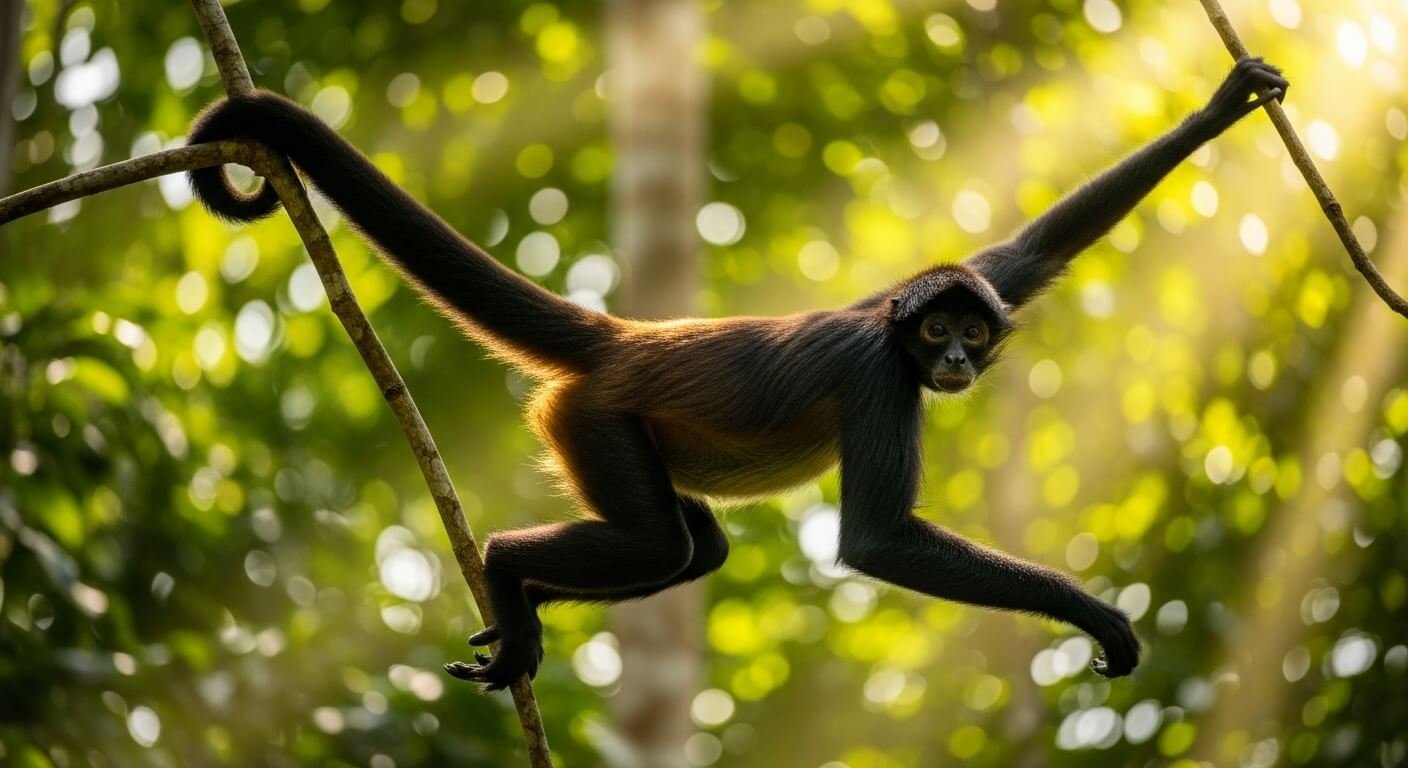
A spider monkey is a type of New World monkey found in Central and South America. Known for its long limbs and prehensile tail, it spends nearly its entire life in trees.
Key characteristics of a spider monkey
-
Long, slender arms and legs
-
Tail that acts like a fifth limb
-
Small body with a highly agile build
-
Reduced thumb, allowing better swinging ability
Their name comes from their spider-like appearance when hanging by their tails.
Why spider monkeys matter in the ecosystem
Spider monkeys are essential seed dispersers. As they eat fruit and move across large areas, they spread seeds that help forests regenerate.
Without them, many tree species would struggle to grow and spread. This directly impacts:
-
Forest density
-
Carbon storage
-
Habitat availability for other animals
Their survival is closely tied to the health of tropical rainforests.
Spider Monkey Habitat and Distribution
Spider monkeys are found in tropical forests across a wide geographic range. Their habitat choice is very specific, which makes them vulnerable to environmental changes.
Where spider monkeys live
They are commonly found in:
-
Southern Mexico
-
Central America
-
Northern regions of South America
-
Parts of Brazil and Peru
They prefer dense, high-canopy rainforests where they can move freely without descending to the ground.
Types of environments they thrive in
-
Tropical rainforests
-
Evergreen forests
-
Mangrove forests in some regions
They avoid open spaces because their bodies are adapted for life in trees, not on land.
How habitat loss affects spider monkeys
Deforestation is the biggest threat to their survival. When forests are cut down:
-
Food sources disappear
-
Travel routes are broken
-
Groups become isolated
This leads to population decline and reduced genetic diversity.
Physical Features That Make Spider Monkeys Unique
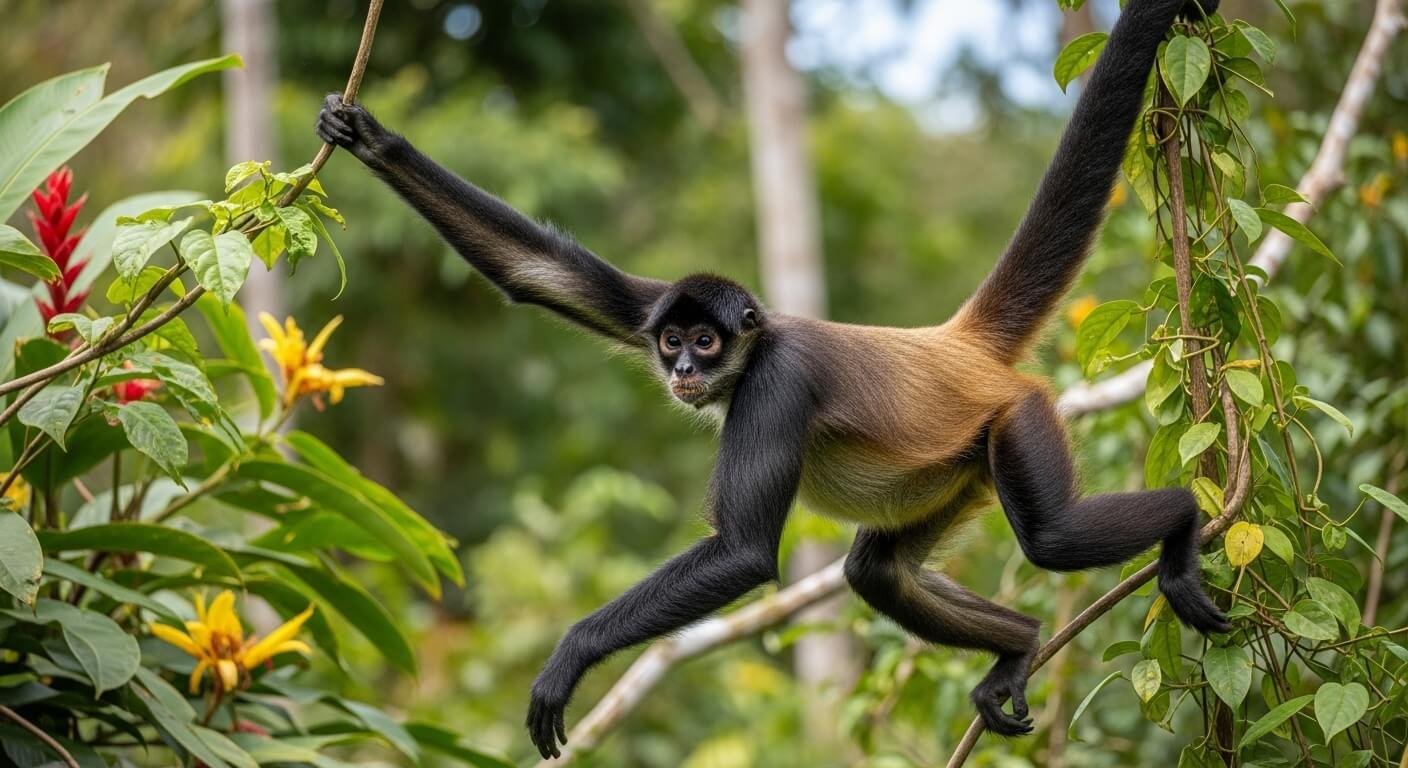
Spider monkeys are built for one thing: movement through trees. Every part of their body supports this lifestyle.
The prehensile tail advantage
Their tail is incredibly strong and flexible. It can:
-
Grip branches securely
-
Support full body weight
-
Act as a balancing tool
The underside of the tail has a sensitive patch that works like a fingertip.
Long limbs and reduced thumbs
Unlike many primates, spider monkeys have either no thumb or a very small one. This helps them swing more efficiently.
Their limbs allow for:
-
Brachiation, which is arm-swinging movement
-
Covering large distances quickly
-
Energy-efficient travel
Vision and intelligence
They have excellent eyesight and strong spatial awareness. This helps them:
-
Navigate complex forest canopies
-
Locate fruit from a distance
-
Avoid predators
Their intelligence also supports social interaction and problem-solving.
Diet and Feeding Behavior of Spider Monkeys
Spider monkeys are primarily frugivores, meaning fruit makes up most of their diet.
What spider monkeys eat
-
Ripe fruits
-
Leaves
-
Flowers
-
Nuts
-
Occasionally insects
They prefer high-quality fruit, which gives them energy for their active lifestyle.
Feeding habits and patterns
They often travel long distances daily to find food. Their feeding behavior includes:
-
Selecting ripe fruit carefully
-
Eating while hanging or sitting in trees
-
Dropping seeds across large areas
This is why they are considered “gardeners of the forest.”
Seasonal diet changes
When fruit is scarce, spider monkeys adapt by eating:
-
More leaves
-
Bark
-
Less preferred food sources
This flexibility helps them survive, but it also shows how dependent they are on forest health.
Social Structure and Behavior
Spider monkeys live in complex social groups that are both flexible and dynamic.
Group dynamics
They typically live in groups of 15 to 30 individuals, but they don’t always stay together.
Instead, they use a system called fission-fusion:
-
Large groups split into smaller subgroups
-
Subgroups change frequently
-
Individuals move between groups
This helps reduce competition for food.
Communication methods
Spider monkeys communicate using:
-
Vocal calls
-
Body movements
-
Facial expressions
Their calls can travel long distances through the forest.
Parenting and care
-
Mothers are the primary caregivers
-
Infants cling to their mothers for months
-
Learning happens through observation and play
Young spider monkeys take several years to become independent.
Spider Monkey vs Other Monkeys: Key Differences
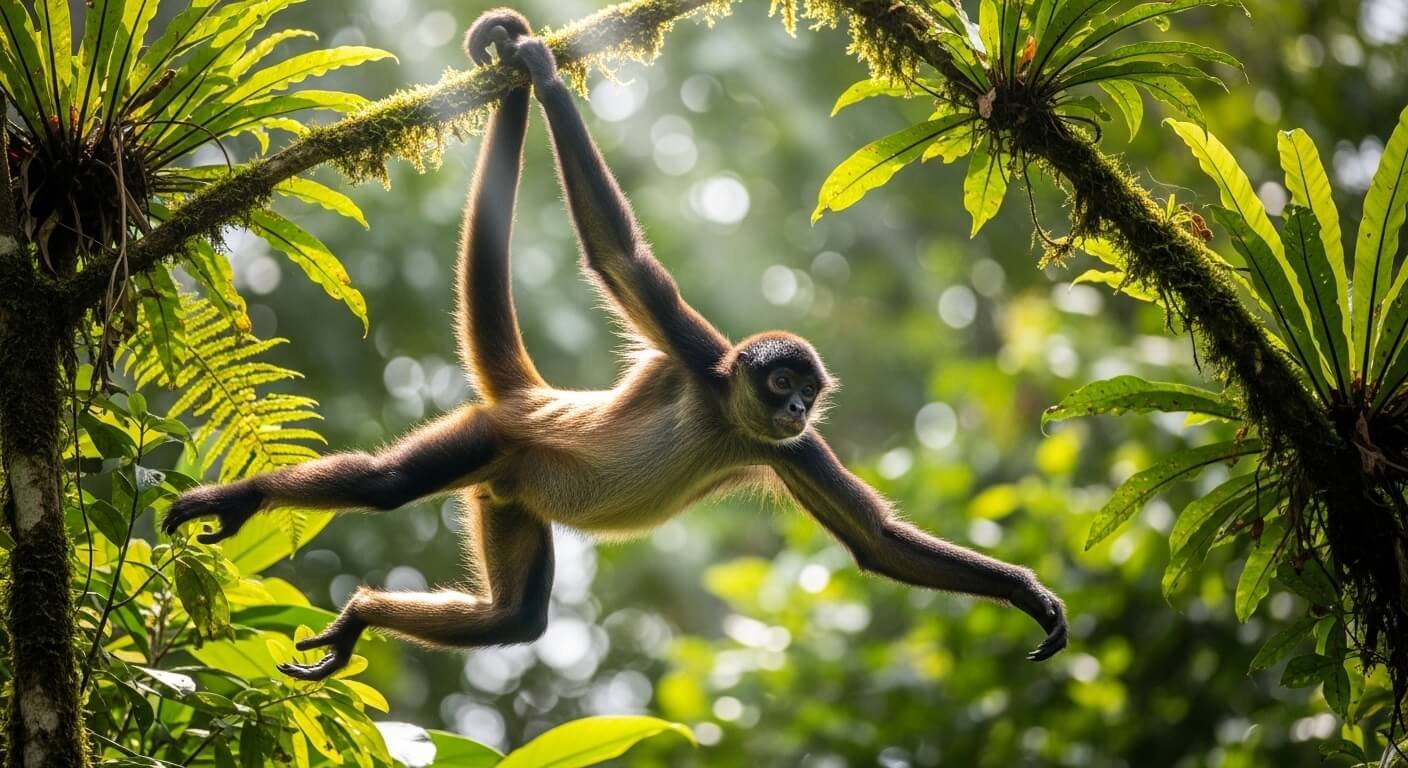
Spider monkeys stand out when compared to other primates.
Comparison with howler monkeys
-
Spider monkeys are more agile
-
Howler monkeys rely more on vocal communication
-
Spider monkeys eat more fruit
Comparison with capuchin monkeys
-
Spider monkeys are larger
-
Capuchins use tools more often
-
Spider monkeys travel greater distances
What makes spider monkeys unique
-
Advanced brachiation ability
-
Highly specialized tail
-
Strong reliance on fruit
They are among the most specialized tree-dwelling primates.
Threats, Risks, and Conservation Status
Spider monkeys face serious threats that continue to impact their populations.
Major threats
-
Deforestation
-
Illegal pet trade
-
Hunting for bushmeat
-
Habitat fragmentation
These pressures have led to declining numbers in many regions.
Conservation status
Several species of spider monkeys are classified as endangered or critically endangered.
Key facts:
-
Populations have dropped significantly in the last few decades
-
Some regions have lost over 50 percent of their populations
-
Conservation efforts are ongoing but challenging
Red flags to watch
-
Rapid forest clearing
-
Increased human encroachment
-
Decline in fruit-bearing trees
These signs indicate worsening conditions for spider monkeys.
Can Spider Monkeys Be Pets? Pros and Cons
The idea of keeping a spider monkey as a pet comes up often, but it comes with serious concerns.
People often assume
-
Highly intelligent
-
Social and interactive
-
Unique and आकर्षक companions
Real cons and challenges
-
Require constant attention
-
Can become aggressive as they mature
-
Need large, naturalistic environments
-
Often suffer in captivity
Legal and ethical issues
In many countries, owning a spider monkey is illegal or heavily regulated. Even where it’s allowed, it raises ethical concerns.
Taking them from the wild contributes to population decline and disrupts ecosystems.
How Spider Monkeys Move: Step-by-Step Breakdown
Their movement is one of the most fascinating aspects of their behavior.
Step-by-step movement process
-
Grip with tail
They secure themselves using their prehensile tail. -
Swing with arms
Long arms allow them to swing from branch to branch. -
Shift body weight
They use momentum to move efficiently. -
Land and stabilize
Tail and limbs work together to maintain balance. -
Repeat in fluid motion
This creates a continuous, graceful movement pattern.
This method allows them to travel quickly without touching the ground.
Why Protecting Spider Monkeys Matters
Saving spider monkeys is about more than protecting one species. It’s about preserving entire ecosystems.
Environmental impact
-
Help forests regenerate
-
Support biodiversity
-
Maintain ecological balance
Scientific importance
Studying spider monkeys helps researchers understand:
-
Primate evolution
-
Social behavior
-
Forest ecology
Human connection
Healthy forests benefit humans through:
-
Climate regulation
-
Oxygen production
-
Natural resources
Protecting spider monkeys supports all of these.
Final Thoughts
The spider monkey is one of the most remarkable creatures in the rainforest, combining agility, intelligence, and ecological importance in a way few animals can match. Its survival is tightly linked to the health of forests, making it a powerful symbol of conservation.
Ignoring the challenges they face risks losing not just a species, but a vital part of the ecosystem that supports countless forms of life. Understanding the spider monkey is the first step toward ensuring it continues to swing through the forests for generations to come.